All published articles of this journal are available on ScienceDirect.

Papaya Seed as a Potential Protein Source: Proposed Extraction Methods and Future Recommendations

Authors Info & Affiliations
Abstract
Papaya (Carica papaya L.) seeds are an underutilized fruit-processing by-product with potential as a source of plant protein. This review evaluates the potential of papaya seed protein as an alternative protein resource, with emphasis on its composition, nutritional characteristics, extraction methods, and techno-functional properties. Available evidence indicates that papaya seeds contain a substantial protein content, although reported composition varies with ripening stage, cultivar, and processing method. Globulins have been identified as the major protein fraction, while the amino acid profile includes several essential amino acids, with methionine occurring at relatively low levels. Conventional alkaline extraction has been used to recover papaya seed protein, whereas aqueous enzymatic extraction has reported higher protein extraction rates under optimized conditions. Pulsed electric field and high-voltage electrical discharge treatments have also demonstrated potential for improving protein release. Emerging technologies, including ultrasound, microwave-assisted extraction, and deep eutectic solvent-based extraction, may offer additional opportunities to improve protein recovery and functionality, although evidence specific to papaya seeds remains limited. Overall, papaya seed protein represents a promising yet understudied plant protein resource. Further research should focus on standardized extraction methods, structure–function relationships, nutritional and safety evaluation, optimization of emerging extraction technologies, and validation in real food systems.
1. INTRODUCTION
The global shift towards plant-based diets reflects growing interest in improving human health while reducing the environmental burden of food production. Plant-based dietary patterns have been associated with lower risks of several chronic diseases, including type 2 diabetes and cardiovascular disease. Additionally, plant proteins generally have a lower environmental impact than animal-derived proteins. At the same time, population growth and increasing food demand continue to place pressure on food and natural resources. Increasing the availability of nutritionally adequate plant-based protein sources is therefore important to both human nutrition and food-system sustainability [1]. Protein is an essential macronutrient required for growth, tissue maintenance, and normal physiological function; inadequate protein intake can impair growth and immune function, particularly in vulnerable populations such as children. Inadequate protein consumption has also been associated with reduced height and weight [2]. However, food insecurity and malnutrition remain major global challenges, highlighting the need to identify additional, affordable, and nutritionally valuable protein sources. These nutritional and environmental considerations have contributed to the interest in alternative proteins, particularly plant-based proteins. Increasing consumer interest in protein-rich foods and the relatively low production costs of many plant protein sources have supported the expansion of the alternative protein sector. However, the alternative protein market remains significantly smaller than the conventional meat sector, with an estimated market value of approximately $2.2 billion compared with $1.7 trillion for the global meat market [3].
Despite this growth, the adoption of plant proteins remains limited by several factors, including differences in sensory quality, nutritional characteristics, digestibility, and techno-functional performance compared with conventional animal proteins. This has increased interest in identifying underutilized plant resources that can provide nutritionally valuable proteins while improving the utilization of existing agricultural resources. Dietary guidelines increasingly encourage greater consumption of plant-based proteins. In the Netherlands, approximately 60% of dietary protein is derived from animal sources and 40% from plant sources, and shifting towards a greater proportion of plant protein has been projected to reduce the environmental impact of food consumption by approximately 25% [1].
Alongside the search for alternative protein sources, utilization of food-processing by-products offers an opportunity to recover nutrients that would otherwise be lost. Fruit seeds are often discarded during processing despite containing proteins, lipids, phenolic compounds, minerals, and other potentially valuable constituents. Their conversion into food ingredients can therefore contribute to both waste reduction and improved resource utilization [4]. Papaya (Carica papaya L.) is an important tropical fruit, with global production reaching approximately 13 million tonnes in 2019. India, Brazil, Mexico, Indonesia, the Dominican Republic, and Nigeria were among the major producers during this period [5]. The processing and consumption of papaya generate considerable quantities of seeds and peels, which are commonly discarded (Fig. 1) [6]. Papaya seeds account for approximately 16% of fresh fruit weight, and each seed is made up of a sarcotesta and endosperm [7]. Their composition therefore provides a basis for investigating papaya seeds as a potential source of value-added food ingredients.
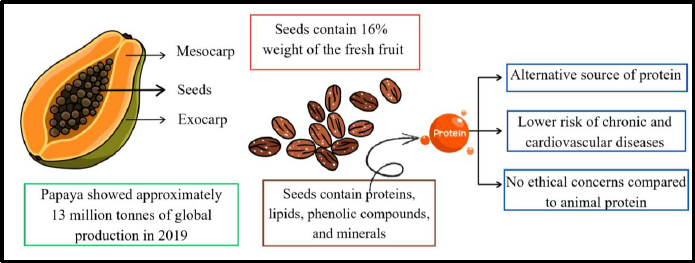
Structural anatomy of papaya seed, highlighting major tissue layers associated with protein localization.
Conventional alkaline extraction is widely used for plant protein recovery because of its simplicity and effectiveness; however, it commonly involves high pH conditions, significant water and chemical consumption, and further neutralization steps that can generate wastewater and produce protein structural changes. These limitations have generated interest in greener extraction approaches, including enzyme-assisted, ultrasound-, microwave-, pulsed-electric-field-, and deep eutectic solvent-assisted processes, which aim to improve protein recovery while reducing chemical intensity and, in some cases, processing time and energy requirements [8, 9]. Unlike previous reviews that primarily discuss the general nutritional, phytochemical, or feed potential of papaya seeds, this review specifically synthesizes the available evidence on papaya seed proteins by linking protein composition and extraction strategy with recovery, structural characteristics, techno-functional properties, nutritional quality, and future green extraction opportunities. Conventional approaches are discussed alongside emerging technologies such as ultrasound, microwave, pulsed electric field, and deep eutectic solvent-assisted extraction, with emphasis on their potential advantages and limitations for papaya seed protein recovery.
2. LITERATURE SEARCH STRATEGY
The literature search was performed using the Scopus database; the publication trend from 2006 to 2026 was observed using keywords like ‘papaya seed’ and ‘papaya seed protein.’ The literature search indicated that research specifically addressing protein extraction from papaya seeds remains relatively limited. A total of 1,431 documents were identified for the period 2006–2026, comprising 1,124 articles, 88 reviews, 122 conference papers, 64 book chapters, and 8 short surveys. The geographical distribution of publications showed that India had the highest number of publications (345), followed by Brazil (190) and Nigeria (125). The identified literature was further examined to synthesize information on papaya seed composition, protein extraction approaches, protein characteristics, functional properties, bioactive components, and potential food and nutraceutical applications. As the present article is a narrative review, the selection of literature was based on its relevance to the scope and objectives of the review rather than on a formal systematic-review protocol. Therefore, potential limitations associated with database coverage and literature selection are acknowledged.
3. PAPAYA SEEDS AS AN UNDERUTILIZED SOURCE OF PROTEIN
3.1. Nutritional and Compositional profile of Papaya Seeds
Papaya pulp is commonly used in processed foods like jams, juices, and jellies because of its high nutritional content. However, the seeds, which make up 20% of the fruit's weight, are frequently discarded as waste, even though they are a valuable source of bioactive compounds [10]. Papaya seeds have also been traditionally used as a food ingredient in some African countries. In Hausa (Nigeria), the seeds are used to prepare daddawa, a fermented food condiment. Different parts of C. papaya, including the fruit, seeds, leaves, bark, and latex, have also been traditionally used for various medicinal purposes [11]. These traditional uses indicate that papaya seeds have applications beyond their treatment as discarded fruit-processing residue and add to the interest in their nutritional and bioactive composition. Papaya seeds have been reported to contain compounds that help treat intestinal worms, ulcers, sickle cell disorder, and poisoning [12]. The proximate composition of papaya seeds varies with ripening stage and processing history (Table 1). Ripe and unripe papaya seeds showed relatively similar protein contents of 26.9% and 26.1%, respectively. However, differences were observed in other components, with ripe seeds showing higher fiber (33.5%) and fat (28.6%), while unripe seeds contained higher carbohydrate (17.8%) and slightly higher ash (8.4%) contents. The relatively similar protein contents between the two ripening stages suggest that protein concentration may be less affected by maturity than some other seed components, although the available data are insufficient to establish a general trend. Greater variation is observed when results from different studies on non-defatted papaya seeds are considered. Reported protein contents range from 24.33 to 27.80%, while carbohydrate, fiber, and fat contents range from 11.67–48.91%, 8.02–22.60%, and 0.65–28.61%, respectively. This variability indicates that proximate composition is not uniform across papaya seed samples and may be influenced by factors such as cultivar, maturity, cultivation conditions, analytical procedures, and processing history. The particularly wide variation in carbohydrate and fat contents is important when comparing reported protein values because changes in the proportions of major components can substantially affect the relative composition of the seed material.
| Parameter (%) | Moisture Content | Protein Content | Carbohydrate Content | Ash Content | Fibre Content | Fat Content | References |
|---|---|---|---|---|---|---|---|
| Category | |||||||
| Ripe papaya seed | 4.4 | 26.9 | 3.8 | 7.2 | 33.5 | 28.6 | [5] |
| Unripe papaya seed | 6.8 | 26.1 | 17.80 | 8.4 | 27.2 | 20.5 | |
| Non-defatted Papaya seed | 2.30-11.02 | 24.33-27.80 | 11.67-48.91 | 3.50-10.88 | 8.02-22.60 | 0.65-28.61 | [12-14] |
| Defatted papaya seed | 0.25 | 44.4 | - | 4.48 | 31.8 | - | [13] |
| Matured unripe papaya seed | 7.34 | 9.65 | 23.34 | 10.25 | 21.25 | 27.72 | [15] |
Defatting further demonstrates the effect of processing on the apparent protein concentration. The protein content increased to 44.4% after defatting compared with 24.33–27.80% reported for non-defatted seeds (Table 1). This increase should be interpreted as relative protein enrichment resulting from lipid removal, rather than an increase in the absolute amount of protein. Defatting may nevertheless be an important pretreatment for protein extraction because it reduces the lipid fraction and increases the protein content of the starting material. However, the defatted material still contained a relatively high fiber content (31.8%), indicating that protein remains associated with a substantial non-protein matrix. This matrix may influence protein solubilization, separation, and the functional properties of the recovered protein. Therefore, the composition of the starting material and the use of pretreatments, such as defatting, should be considered when comparing protein extraction studies of papaya seeds [5, 12-15]. Overall, the available compositional data indicate that papaya seeds contain a substantial protein fraction, but their composition varies considerably among samples and processing conditions. This variability is important for protein valorization because the initial lipid, fibre, carbohydrate, and protein contents can influence both the efficiency of extraction and the composition of the final protein product.
3.2. Protein Composition and Amino Acid Profile of Papaya Seed
Papaya seed comprises different protein fractions, with globulins representing the major fraction (53.90%). Marfo et al. [16] also reported differences in protein solubility according to extraction medium, with the highest solubility of seed protein observed in 5% NaCl (23.77%) and a solubility peak around pH 8. Electrophoretic analysis further indicated heterogeneity among the soluble protein fractions, with different molecular-weight bands detected in the water-, NaCl-, and NaOH-soluble fractions. These findings indicate that papaya seeds contain heterogeneous protein fractions with different solubility characteristics, which may influence their behavior during subsequent protein extraction. In a recent study by Thanasegaran et al. [10], the characterization of papaya seeds was conducted. In Fourier-Transform Infrared Spectroscopy (FTIR), prominent protein bands, including amide I and II vibrations typical of seed storage proteins, were observed. Several bands in the fingerprint region were also noted, corresponding to C–O and C–O–C stretching vibrations of polysaccharides, particularly cellulose and pectin, as well as C–H bending of aliphatic chains. Pretreatment processes such as defatting can be used to decrease fat content and increase protein extraction efficiency. Traditionally, conventional solvents such as hexane are used for defatting. However, hexane is derived from non-renewable sources and has a strong environmental impact and poses high risks to operators' safety. It is highly flammable, and when released into the atmosphere, it can react with other pollutants to form ozone and other photochemical oxidants. Hexane is also recognized as neurotoxic due to its solubility in neural lipids. Therefore, alternative solvents are being explored for the defatting process. For instance, ethanol, along with CO2 and bio-based ethyl acetate and acetone, has shown compatibility with lipid extraction and safe use for food components, ingredients, and raw biomass processing [17].
The amino acid profile of papaya seeds showed considerable variation between the reported studies. Glutamic acid (4.76–12.40 g/100 g protein), leucine (3.84–7.78 g/100 g protein), and arginine (2.90–6.44 g/100 g protein) were among the amino acids reported at relatively higher concentrations. Essential amino acids cannot be synthesized in sufficient quantities by the human body and therefore must be obtained through the diet. Among them, leucine plays important roles in muscle protein synthesis and tissue repair, while isoleucine contributes to energy metabolism and hemoglobin synthesis. Threonine is involved in protein biosynthesis. Among the essential amino acids, isoleucine, lysine, and threonine were present in good amounts, as shown in Table 2. Methionine was consistently among the least abundant essential amino acids (1.30–1.56 g/100 g protein) and is important for normal cellular functions. Glutamate and serine were also present in substantial amounts; glutamate plays roles in nervous system functions, while serine participates in protein biosynthesis and brain development. Cysteine was reported at a relatively low concentration (1.07 g/100 g protein) and contributes to glutathione metabolism. The presence of these essential amino acids in papaya seeds therefore contributes to their nutritional value as a potential plant protein source [12, 18-20]. Although papaya seeds provide essential amino acids, the relatively low methionine content suggests that sulfur-containing amino acids may represent a nutritional limitation. Therefore, amino acid composition alone should not be used to measure protein quality; comparison with reference amino acid patterns, together with digestibility measurements, is required.
| Amino Acid | Amino Acids (g/100g Protein) | References |
|---|---|---|
| Alanine | 2.85–3.22 | [12, 18, 20] |
| Arginine | 2.90–6.53 | |
| Aspartic acid | 3.49–7.51 | |
| Cysteine | 1.07* | |
| Glutamic acid | 4.76–13.01 | |
| Glycine | 3.48–4.42 | |
| Histidine | 2.21–3.99 | |
| Isoleucine | 3.09–5.49 | |
| Leucine | 3.84–7.78 | |
| Lysine | 4.21–4.85 | |
| Methionine | 1.30–1.56 | |
| Phenylalanine | 3.38–3.59 | |
| Proline | 2.13–2.78 | |
| Serine | 3.01–4.75 | |
| Threonine | 2.85–4.58 | |
| Tryptophan | 2.46* | |
| Tyrosine | 2.06–3.39 | |
| Valine | 2.25–3.18 | |
| Cystine | 1.14-1.21 |
3.3. Anti-nutritional Factors and Processing Considerations
Papaya seeds contain several anti-nutritional compounds that should be considered when evaluating their use as a food or protein ingredient. Reported compounds include phytic acid, tannins, oxalates, and trypsin inhibitors. In papaya seed meal, phytic acid, tannins, and oxalate were reported at approximately 23.3, 10.6, and 1.89 mg/100 g dry weight, respectively, while trypsin inhibitor activity was reported as 1.77 TIU/mg protein [18]. These compounds may affect nutritional quality by reducing mineral bioavailability or interfering with protein digestion [20]. However, the reported levels are relatively low, and their nutritional significance may depend on cultivar, processing conditions, and the amount consumed. The in vitro protein digestibility of papaya seed flour was reported to be 80.69%, indicating good protein digestibility. The relatively low levels of antinutritional factors, particularly trypsin inhibitors and tannins, may contribute to the relatively high digestibility. This suggests that papaya seed protein has potential nutritional value, although further studies are needed to confirm its overall protein quality [20].
Processing can therefore be important for reducing these compounds before or during protein recovery. In other plant materials, conventional approaches such as soaking, cooking, fermentation, germination, and other treatments have been investigated for reducing antinutritional factors in plant materials. Conventional treatments such as soaking, boiling, and germination can reduce antinutritional factors and improve protein digestibility, although they may require additional processing time. Emerging non-thermal technologies, including ultrasound and other physical treatments, have also been investigated for modifying plant-protein structure and functionality, with potential effects on digestibility and nutritional quality [21]. Fermentation substantially reduced the antinutritional factors in papaya seeds. Oxalate decreased from 210.1 to 40.2 mg/100 g, phytic acid from 102.0 to 68.0 mg/100 g, tannin from 15.5 to 8.3 mg/100 g, and trypsin inhibitor from 2431.2 to 63.0 mg/100 g. The significant reduction in trypsin inhibitor indicates that fermentation may be an effective processing approach to improve the nutritional quality of papaya seeds, although its effectiveness may vary with fermentation conditions [22]. However, direct evidence demonstrating the removal of these antinutritional factors during papaya seed protein extraction remains limited.
4. PROTEIN EXTRACTION FROM PAPAYA SEEDS: CONVENTIONAL AND EMERGING APPROACHES
Extraction affects the protein structure significantly by differences in profile, quality, and functionality. These methods can be divided into two types: conventional methods and novel methods (ultrasound-assisted extraction, pulsed electric field, deep eutectic solvent, and enzyme-assisted extraction). These novel approaches may be considered green extraction technologies when they reduce environmental impacts while maintaining or improving extraction efficiency. Green extraction refers to the reduced use of chemicals, sustainable extraction, biodegradability of the solvent, and an environmentally friendly process with less waste generation. For example, DES is considered to be a green solvent because of its low toxicity profile, sustainability, and biodegradability, depending on the components used [8, 9]. Thus, the classification of an extraction method as “green” depends on the overall sustainability of the process rather than solely on the use of a novel extraction technology or alternative solvent.
4.1. Conventional Method of Protein Extraction
Protein extraction from papaya seeds has been investigated mainly through alkaline solubilization followed by acid precipitation. The reported studies show that extraction conditions affect both protein recovery and the composition of the final protein product. Wang et al. [23] investigated alkaline extraction from defatted papaya seed flour and optimized the solid-to-liquid ratio, pH, temperature, and extraction time. The highest reported extraction yield was 48.53%, obtained at a solid-to-liquid ratio of 1:40, pH 9.3, 50°C, and 120 min. The extracted protein also showed increased emulsifying and foaming properties as protein concentration increased, indicating its potential for food applications. In comparison, another study used defatting followed by alkaline solubilization and acid precipitation to obtain a protein isolate. The isolate contained 88.08% protein content, compared to 32.40% in the defatted flour and 25.18% in the full-fat flour [24, 25]. The 48.53% reported by Wang et al. [23] represents the extraction rate, whereas the 88.08% reported by Kadiri et al. [24] represents the protein content of the final isolate. Extraction yield generally refers to the amount of total extract obtained relative to the initial raw material. Protein recovery represents the proportion of protein initially present in the raw material that is recovered following extraction. In contrast, protein content refers to the proportion of protein in the final extracted fraction and therefore primarily reflects the degree of protein enrichment or concentration of the extract. Consequently, these parameters should not be used interchangeably when comparing protein extraction studies [23-25].
The results of Kadiri et al. [24] also demonstrate the importance of pH during protein recovery. Protein concentration in the isolate was lower at acidic pH and increased to 88.08% at pH 10. The lower protein concentration around pH 4 is consistent with reduced protein solubility near the isoelectric region, whereas the higher concentration under alkaline conditions was associated with increased electrostatic repulsion and protein unfolding. However, higher pH does not necessarily result in better protein quality. The experiment noted that extreme alkaline conditions may promote protein denaturation and negatively affect the functional properties of the isolate. Thus, alkaline extraction requires a balance between improving protein solubilization and maintaining the structural and functional quality of the recovered protein. Overall, the two studies show that alkaline extraction can effectively recover and concentrate papaya seed proteins, but the optimum conditions differ considerably. Wang et al. [23] achieved the reported extraction rate within 120 min at pH 9.3, whereas Kadiri et al. [24] used pH 10 with a 4h extraction period to produce a highly concentrated protein isolate. This difference indicates that optimization depends not only on maximizing protein solubilization but also on the desired characteristics of the final protein product. Conventional protein extraction commonly relies on aqueous acidic or alkaline media. Although these approaches can facilitate protein solubilization, harsh alkaline conditions may promote protein denaturation and structural alterations, whereas acidic conditions may be less effective at disrupting the plant matrix [26].
4.2. Emerging Extraction Methods for Protein Extraction
The limitations of conventional alkaline extraction have prompted the investigation of alternative approaches to improve protein recovery under milder or less chemically intensive conditions (Fig 2). These approaches include enzyme-assisted extraction, physical-assisted technologies such as Pulsed Electric Field (PEF), High-Voltage Electrical Discharge (HVED), and ultrasound, as well as solvent-based approaches such as deep eutectic solvents (DESs). However, the environmental and processing advantages of these methods depend on their operating conditions, energy requirements, and downstream processing needs. As research to date shows, papaya seeds are a rich source of phytochemicals, including phenolic compounds; however, these compounds may interfere with protein extraction and affect the quality of the recovered protein fraction. Phenolic compounds can interact with proteins and amino acids, potentially reducing the availability of certain amino acids such as methionine and lysine. Under alkaline extraction conditions, phenolic compounds may undergo oxidation to reactive quinones, which can interact with protein functional groups, including amino (-NH2) and thiol (-SH) groups, through covalent and non-covalent interactions. Such interactions may promote protein–phenolic complex formation and influence protein solubility, recovery, and functionality [27]. Therefore, appropriate pretreatment or extraction strategies may be required to minimize protein–phenolic interactions and improve the efficiency and quality of papaya seed protein extraction.
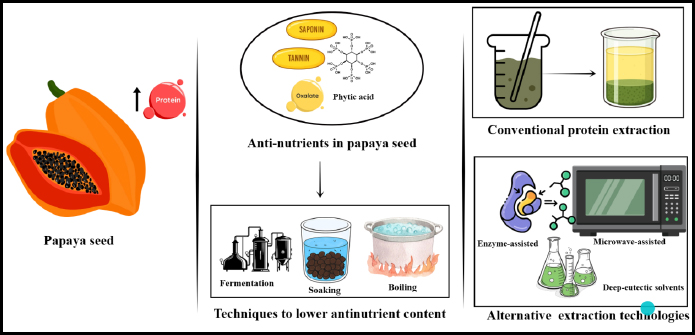
Overview of papaya seed protein as an underutilized resource, highlighting major antinutritional factors, conventional and emerging protein extraction approaches, and processing techniques for reducing antinutritional components.
The potential of aqueous enzymatic extraction was demonstrated by Wang et al. [28], who used papain to extract papaya seed protein. Response surface methodology identified a solvent-to-material ratio of 1:19, a temperature of 49°C, a hydrolysis time of 5 h, an enzyme concentration of 2%, and a pH of 7.0 as the optimum conditions, with a reported extraction rate of 84.96%. This value was higher than the 48.53% extraction rate reported by Wang et al. [23] using alkaline extraction. However, the difference cannot be attributed solely to the use of papain because the two studies differed in extraction mechanism, solid-to-liquid ratio, pH, temperature, and processing time. In addition, the enzymatic process required 5h compared with 120 min for the alkaline process and required an additional enzyme input. Therefore, the results indicate the potential of enzymatic extraction to improve protein recovery. The longer processing time and enzyme requirement should also be considered when evaluating its practical application. Enzyme-assisted extraction also requires controlled pH and temperature conditions suitable for the selected enzyme. Carbohydrases and proteases may therefore require different processing conditions depending on their optimum activity. Although enzymatic treatment can facilitate protein release by disrupting interactions between proteins and other components of the plant matrix, it may require relatively long processing times and can increase energy and operational costs. Enzymatic treatment may also alter protein–carbohydrate interactions, which can influence the composition and properties of the recovered protein fraction [26].
PEF and HVED provide a different approach by promoting physical disruption of the seed matrix. Parniakov et al. [6] compared conventional aqueous extraction with PEF and HVED treatment of papaya seeds. PEF and HVED were applied at approximately 13.3 and 40 kV/cm, respectively, and HVED produced higher protein concentrations in the extract than conventional aqueous extraction and PEF. The experiment proposed that shock waves and cavitation generated during electrical discharge could disrupt the seed matrix and facilitate the release of intracellular compounds. They further suggested that HVED could affect interactions between phenolic compounds and other components of the seed matrix, potentially facilitating the release of proteins and phenolic compounds. Ultrasound-assisted extraction represents another potential physical approach. Acoustic cavitation generated during ultrasonication can produce localized shear forces that disrupt plant tissues and protein aggregates, potentially facilitating the release of intracellular proteins. Ultrasound can also modify protein conformation and intermolecular interactions, thereby affecting solubility, digestibility, and techno-functional properties. In enzyme-assisted processes, ultrasound may additionally improve enzyme accessibility to protein substrates and facilitate hydrolysis. However, these effects are strongly dependent on frequency, intensity, treatment time, temperature, and the characteristics of the protein material. Excessive treatment can produce undesirable structural changes; therefore, ultrasound conditions should be optimized rather than assuming that higher treatment intensity will yield better results. Studies in other plant-protein systems have also investigated the use of ultrasound to reduce antinutritional factors and modify protein allergenicity [21]. However, these effects are dependent on the protein source and processing conditions and cannot currently be assumed for papaya seed protein. Therefore, ultrasound should be considered a potential technology for papaya seed protein extraction rather than an established method for this raw material.
Evidence from other seed proteins further demonstrates the potential of emerging extraction technologies. Anyiam et al. [29] compared Enzyme-Assisted (EAE), Ultrasound-Assisted (UAE), and Microwave-Assisted Extraction (MAE) with conventional alkaline extraction for Moringa oleifera seeds. The emerging methods improved protein yield, protein content, solubility, and techno-functional properties compared with conventional extraction. Protein yield ranged from 14.60–30.08%, while protein content ranged from 80.47–86.61%. Phytate and trypsin inhibitor levels were also reduced, while in vitro protein digestibility increased to 88.11–93.81%. Although UAE and MAE provided high protein yield and purity, EAE provided the best balance of functionality and digestibility. These findings demonstrate that the choice of extraction technology can influence not only protein recovery but also the nutritional and functional quality of the recovered protein.
DESs possess strong solubilizing properties for various non-volatile compounds and have negligible volatility, which can reduce solvent loss during extraction. Protein extraction using DES can be performed through both liquid–liquid and solid–liquid approaches, with solid–liquid extraction commonly involving direct contact between the plant material and the DES. Compared with conventional aqueous or organic solvents, DESs provide a different hydrogen-bonding environment that may influence protein–matrix interactions and protein solubilization. Conventional extraction under strongly acidic or alkaline conditions can promote protein unfolding, expose hydrophobic or hydrophilic groups, and potentially alter protein structure. In contrast, the hydrogen-bond network formed between the hydrogen-bond acceptor and hydrogen-bond donor components of DES may facilitate interactions with protein molecules without necessarily causing chemical modification of the protein structure. However, the extent to which DES preserves protein structure depends on the composition of the DES and extraction conditions and should therefore be experimentally evaluated rather than assumed [26].
DES-assisted extraction has also been investigated in other seed proteins. Wang et al. [30] reported that DES extraction of Moringa oleifera seed protein affected protein recovery, foaming properties, and secondary structure, with relatively less alteration of protein secondary structure under the investigated conditions. Similarly, a comparative study of kenaf seed protein reported that DES-assisted extraction produced proteins with a more ordered structure than conventional alkaline extraction. The DES-extracted proteins also showed a more balanced distribution of hydrophilic and hydrophobic amino acids. Both the choline chloride: urea (ChCl: U)-based DES and conventional alkaline extraction produced proteins with good functional properties, while ChCl: U was identified as a promising alternative for kenaf seed protein extraction [31]. These findings suggest that DES may influence protein structure and functionality differently from conventional alkaline extraction, although its performance depends on the specific DES composition and extraction conditions. DES-assisted extraction also presents challenges, including the relatively high viscosity of many DES systems, which can limit mass transfer, as well as limited selectivity and difficulties in separating the recovered protein from the DES phase. These factors are particularly important when the recovered protein is intended for food applications.
Overall, emerging extraction technologies offer distinct advantages over conventional alkaline extraction. Enzyme-assisted extraction has demonstrated high reported extraction rates but requires longer processing and enzyme addition; HVED can enhance protein release through physical disruption but may yield extracts that require additional purification; ultrasound has the potential to improve protein accessibility and modify protein functionality, although papaya-specific evidence remains limited; and DESs offer extraction medium but require careful consideration of viscosity, selectivity, and downstream protein recovery. Importantly, higher extraction recovery alone should not be used to determine the most suitable technology. Protein purity, structural integrity, digestibility, techno-functional properties, energy requirements, processing time, and downstream purification should also be considered when evaluating these approaches.
5. IMPORTANCE OF FUNCTIONAL PROPERTIES OF PROTEIN
Functional properties of proteins are closely associated with their molecular structure and stability and play an important role in food processing and sensory attributes. This is particularly relevant to emulsions and foams, where proteins act as surface-active agents by adsorbing at the interface between the dispersed and continuous phases. Their ability to rapidly adsorb, unfold, and form a cohesive interfacial layer contributes to the formation and stabilization of these systems [19]. Protein solubility is an important functional property because it influences protein behavior in aqueous food systems and affects processes such as foaming, emulsification, and gelation. Highly aggregated or poorly soluble proteins have a limited ability to migrate to the air–water interface and form stable interfacial layers, thereby reducing foam formation and stability. This is particularly relevant for conventionally processed plant proteins, which may contain highly aggregated globulins with low solubility and large molecular weights (>300 kDa). Therefore, extraction and processing conditions that influence protein aggregation and solubility can also affect foaming performance. Emulsifying properties are important for stabilizing oil–water systems in foods. Proteins can adsorb at the oil–water interface and form an interfacial layer around dispersed droplets, helping to prevent droplet aggregation. Poor interfacial stabilization can increase droplet size and promote creaming, sedimentation, or oil separation [32]. Similarly, Water-Holding Capacity (WHC) describes the ability of proteins to retain water and is relevant to moisture retention, texture, and freshness in food products. Oil-holding capacity (OHC) reflects the ability of proteins to interact with and retain lipids through hydrophobic interactions and can influence texture and flavor retention. Protein structure, surface hydrophobicity, matrix characteristics, and lipid properties can affect OHC [33].
These properties are interconnected rather than independent. Protein structure and solubility influence the ability of proteins to interact with water, air, and oil interfaces, thereby affecting foaming, emulsification, WHC, and OHC. An early comparative study evaluating papaya and soybean seed products showed that the concentration of papaya seed protein substantially improved its functional characteristics. Water absorption capacity increased from 104% in papaya seed meal to 224% in the protein concentrate, while fat absorption capacity increased from 118% to 205%. Similarly, emulsification ability increased from 35.0% to 39.7%, and whipping property increased from 5.17% to 20.3% following protein concentration. Nevertheless, the corresponding values for soybean protein concentrate were higher, particularly for water absorption (314%), emulsification (50.3%), and whipping property (221%). These findings suggest that protein concentration can improve the functional performance of papaya seed protein, but its functionality remains below that of established soybean protein ingredients. The comparati-vely poor whipping performance may indicate limitations in the ability of papaya seed proteins to rapidly adsorb and stabilize air–water interfaces [16]. Kadiri et al. [25] reported that the solubility of papaya seed protein decreased with decreasing pH, reaching a minimum near the isoelectric point (pH 4), where reduced electrostatic repulsion promotes protein aggregation. The protein isolate showed a water-holding capacity of 3.65 g/g, oil-holding capacity of 3.60 g/g, foaming capacity of 26.14%, foam stability of 13.06%, emulsifying capacity of 74.05 m2/g, and emulsion stability of 100.80%. These results demonstrate that papaya seed protein possesses measurable water- and oil-binding, foaming, and emulsifying properties, although its performance is strongly influenced by pH and protein solubility.
Consequently, protein recovery alone is insufficient for evaluating the suitability of papaya seed protein as a food ingredient. The effects of extraction conditions on protein structure, solubility, and techno-functional properties should also be considered. For papaya seed protein, this is important because alkaline, enzymatic, and physical extraction processes can expose the proteins to different pH, temperature, and mechanical conditions that may alter their molecular interactions and functional behavior. Plant proteins may also present sensory and nutritional challenges that can influence their application in foods. Plant-derived ingredients can exhibit undesirable grassy, green, beany, fatty, or bitter notes originating from volatile and non-volatile compounds, including aldehydes, alcohols, ketones, peptides, saponins, and phenolic compounds. In addition, antinutritional compounds such as phytate, tannins, saponins, lectins, enzyme inhibitors, and oxalates may remain associated with the protein fraction depending on the raw material and extraction conditions. Therefore, the development of papaya seed protein as a food ingredient requires consideration of functional performance, sensory characteristics, and nutritional quality, rather than protein recovery alone [8].
6. POTENTIAL APPLICATIONS OF PAPAYA SEED PROTEIN
Direct evidence on the application of papaya seed protein in formulated foods remains limited. However, available studies indicate that papaya seed protein possesses several functional properties relevant to food formulation. Marfo et al. [16] reported water absorption, fat absorption, emulsification, emulsion stability, and whipping properties for papaya seed meal and protein concentrate. Protein concentration improved several of these properties compared with the seed meal, although the functional performance remained lower than that of corresponding soybean products. These findings suggest that papaya seed protein may be a functional ingredient, particularly in food systems requiring water- or lipid-binding and interfacial activity. Emulsifying properties are important for the formulation and stability of foods such as dressings, beverages, and sauces. The emulsifying ability of proteins depends on factors such as amino acid composition, molecular structure, surface hydrophobicity, and molecular weight rather than protein content alone. Thus, a higher protein content does not necessarily indicate better emulsifying performance. For example, although lupin contains more protein than wheat and green pea, its emulsifying performance may be comparatively lower [34].
Direct studies evaluating papaya seed protein concentrate or isolate in formulated food products are currently limited. However, evidence from whole papaya seed flour demonstrates the potential of the seed fraction as a food ingredient. Azevedo and Campagnol [35] reported that incorporation of papaya seed flour into hamburgers improved cooking yield and moisture retention while reducing product shrinkage. Sensory quality was not adversely affected at incorporation levels up to 2%. These findings indicate that papaya seed-derived ingredients can contribute to both nutritional and technofunctional quality in food formulations, while also providing a route for utilization of an underutilized processing by-product. Further evidence of the food application potential of papaya seeds was reported by Ávila et al. [36], who incorporated papaya seed flour into cornmeal porridges. The addition of papaya seed increased phenolic compound content and antioxidant capacity. Incorporation of papaya seed flour also reduced the enthalpy required for cornmeal gelatinization and decreased the tendency for retrogradation, indicating improved functional characteristics of the porridge system. These findings demonstrate the potential of papaya seed-derived ingredients for nutritional and functional enhancement of cereal-based foods. However, these findings cannot be directly extrapolated to papaya seed protein concentrates or isolates, as the functional behavior of whole-seed flour is also influenced by its fiber, lipid, and other non-protein components. Therefore, dedicated studies are required to determine whether isolated papaya seed protein can provide comparable benefits in food systems. Further research is therefore required to validate these potential applications in real food matrices. In particular, studies should evaluate sensory characteristics, protein digestibility, antinutritional factors, storage stability, interaction with other food components, and the effect of processing conditions on functionality. Application-specific studies using papaya seed protein in beverages, bakery products, emulsions, and other protein-enriched foods would help determine whether the functional properties observed in isolated laboratory systems translate into practical food performance.
7. FUTURE PERSPECTIVE
Despite the nutritional potential and reported functional properties of papaya seed protein, several research gaps need to be addressed before its wider use as a food protein ingredient can be established. First, more systematic studies are required to optimize protein extraction, considering not only protein recovery but also purity, structural integrity, digestibility, and techno-functional properties. In particular, emerging approaches such as ultrasound, pulsed electric field, microwave, and deep eutectic solvent-assisted extraction require further applications using papaya seeds, as evidence specific to this raw material remains limited.
Standardized methods should also be used to allow comparison among extraction studies. Reported values currently differ in terms of extraction rate, protein yield, protein recovery, and protein content, making direct comparison difficult. Future studies should clearly distinguish these parameters and report a complete discussion from the starting seed material to the final protein product. The effects of key processing variables, including pH, temperature, extraction time, solid-to-liquid ratio, pretreatment, and precipitation conditions, should also be evaluated alongside protein structural changes. Further attention is required to the nutritional quality and safety of papaya seed protein. Amino-acid composition should be evaluated against established reference patterns, together with protein digestibility and, where appropriate, indices such as Essential Amino Acid Index (EAAI), Protein Digestibility-Corrected Amino Acid Score (PDCAAS), and Digestible Indispensable Amino Acid Score (DIAAS). The effects of processing on antinutritional compounds such as phytate, tannins, oxalate, and trypsin inhibitors should also be determined in the final protein ingredient rather than only in the original seed material. In addition, potential allergenicity and the safety of the recovered protein require further investigation before food applications can be established.
Another important research direction is the relationship between protein structure and functionality. Changes in molecular weight, secondary structure, surface properties, aggregation, and protein–phenolic interactions during extraction should be linked with properties such as solubility, water- and oil-holding capacity, emulsification, foaming, and gelation. This would help identify extraction conditions based on the intended food application rather than simply maximizing protein recovery. Product development should include sensory acceptance, digestibility, storage stability, processing stability, and interactions with other food components. Scale-up studies and preliminary techno-economic and life-cycle assessments would also be valuable in determining whether recovering protein from papaya seeds can provide practical environmental and economic benefits. Such research could help determine whether papaya seed protein can move from an underutilized fruit-processing by-product to a reliable, value-added protein ingredient.
CONCLUSION
Papaya seeds represent an underutilized source of plant protein with potential for food and value-added applications. The available literature indicates that papaya seeds contain a significant protein content, with globulins reported as the major protein fraction, and provide a range of essential amino acids. However, variations in seed composition, processing history, and reported amino acid profiles indicate that their nutritional quality should be evaluated using standardized approaches rather than total protein content alone. Protein recovery from papaya seeds has been demonstrated using conventional alkaline and aqueous enzymatic extraction, and PEF and HVED have shown potential to improve protein release. Alkaline extraction can yield concentrated protein products, whereas aqueous enzymatic extraction has been reported to achieve a higher extraction rate under optimized conditions. However, these values cannot be directly compared because the studies used different extraction conditions and reported different measures of recovery and protein concentration. Emerging approaches such as ultrasound and other green extraction technologies may offer additional opportunities to improve protein recovery and quality, but their application to papaya seeds remains insufficiently investigated. Overall, the potential of papaya seed protein extends beyond protein recovery alone. The structural characteristics, amino acid composition, antinutritional factors, and techno-functional properties of the recovered protein must be considered when assessing its suitability for food applications. Current evidence supports papaya seed protein as a promising but still underexplored plant protein resource. Further research should focus on standardized extraction and reporting methods, nutritional and safety evaluation, structure–function relationships, optimization of emerging extraction technologies, and validation in real food systems. Such efforts would provide the evidence needed to assess the practical potential of papaya seed protein as a value-added ingredient derived from an underutilized fruit-processing by-product.
AUTHORS’ CONTRIBUTIONS
The authors confirm their contribution to the paper as follows: S.A.: writing, reviewing and editing; A.S.: editing and reviewing; P.R., N.K., A.K. and R.K.: Review and editing; J.S.: conceptualisation, supervision, writing, review and editing. All authors reviewed the results and approved the final version of the manuscript.
LIST OF ABBREVIATIONS
| FTIR | = Fourier transform infrared spectroscopy |
| TIU | = Trypsin Inhibitory Unit |
| PDCAAS | = Protein Digestibility-Corrected Amino Acid Score |
| DIAAS | = Digestible Indispensable Amino Acid Score |
| EAAI | = Essential Amino Acid Index |
| PEF | = Pulsed Electric Field |
| HVED | = High-Voltage Electrical Discharge |
| DES | = Deep Eutectic Solvents |
| EAE | = Enzyme-assisted Extraction |
| UAE | = Ultrasound-assisted Extraction |
| MAE | = Microwave-assisted Extraction |
| WHC | = Water Holding Capacity |
| OHC | = Oil Holding Capacity |
ACKNOWLEDGEMENTS
The author thanks Lovely Professional University for providing support during the review process.