All published articles of this journal are available on ScienceDirect.

Heat Stress Tolerance in Fruit Crops: Integrating Physiology, Hormonal Regulation, and Omics for Climate-Resilient Production
 Sajan Kurien2
Umesh B. C.3
V Suresh3
R. S. Giriprasath1
Authors Info & Affiliations
Abstract
Global warming and temperature rise are now recognized as one of the biggest problems faced by humanity. Even a 1ºC rise in temperature affects all living beings, including crops. Heat stress affects crop physiology from seed germination to fruit abscission and senescence. Some crops and plants have the potential to withstand heat stress and exhibit this ability to varying degrees through a series of biochemical and molecular changes. This review critically examines the impact of high-temperature stress on key physiological processes in fruit crops, including photosynthesis, reproductive development, assimilate partitioning, and yield formation. It also emphasizes how phytohormonal interaction, metabolic modifications, and stress-responsive signalling pathways contribute to thermotolerance. With a focus on their use in identifying heat-tolerant characteristics, genes, and rootstock-scion pairings in fruit crops, recent developments in omics approaches, genomics, transcriptomics, proteomics, metabolomics, and phenomics are described. Furthermore, based on current research, management-based mitigation techniques such as grafting, cultivar selection, antitranspirants, and water and canopy management techniques are assessed. This review outlines knowledge gaps and future research goals for creating heat-resilient fruit production systems under changing climatic conditions by integrating traditional physiological knowledge with new omics-driven insights. The synthesis presented here will be valuable for plant physiologists, horticulturists, breeders, and researchers working on climate adaptation in perennial fruit crops.
1. INTRODUCTION
The global horticulture sector is rapidly growing due to factors like demand for fresh produce, food security, water scarcity, and urbanization. According to FAOSTAT/Statbase estimates, global fruit output reached over 952 million tonnes in 2023, marking a ~30% increase from 2010. Fruit production in India is projected to reach approximately 114.5 million tons in 2024–2025, a slight increase over prior years and a long-term growth of roughly 30% over the preceding ten years. Horticulture, a labor-intensive industry, improves income, job opportunities, and nutrition. Technology has boosted profitability and production over the last 20 years. The primary factor limiting agricultural systems' productivity is environmental stressors. Abiotic stresses (Fig. 1), especially drought, limit agricultural productivity, affecting up to 70% of crop output globally. Changes in climate are a key challenge for agriculture. Fruit crops, in contrast to annual field crops, are primarily woody perennials that stay in the field for years or decades. As a result, they are subjected to recurring and frequently cumulative heat stress episodes. Fruit crops under heat stress experience carry-over effects that impact flowering induction, bud viability, carbohydrate reserves, and reproductive success in subsequent seasons, in addition to current-season vegetative growth and fruit development. Short-term stress reactions from annual crops or model plants are insufficient to describe these multi-year legacy effects, which are a defining feature of perennial horticultural systems. Fruit crop-specific investigations are also necessary since extrapolating heat stress processes from annual crops to fruit crops may result in insufficient or deceptive results.
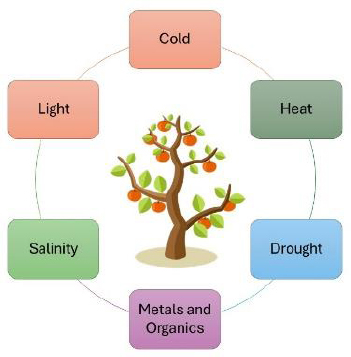
Major abiotic stresses that affect the crop yield and quality.
High Temperature (HT) is a key factor in declining water quality and quantity, affecting both agriculture and human life [1]. Global warming is expected to worsen heat stress, reducing crop productivity. Rising temperatures disrupt plant morphology, physiology, and metabolism, hindering growth and lowering yield (Fig. 2). HT causes damage to plants directly and indirectly (Fig. 3), leading to cell death and structural collapse [2].
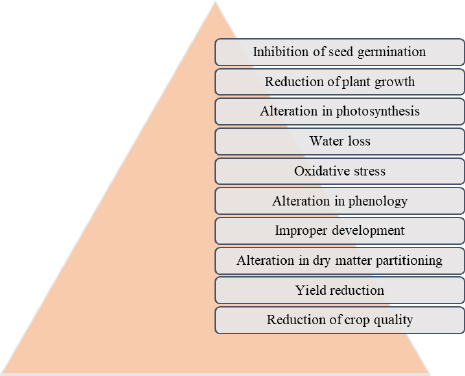
Major effects of HT on plants.
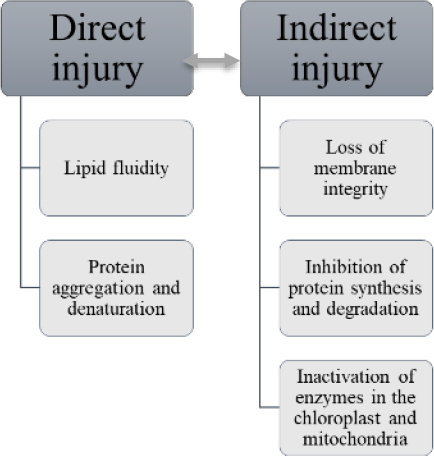
Direct and indirect injuries in plants due to the rise in temperature.
Plants combat various abiotic stresses, including heat, by altering metabolism and physiology. They maintain cell turgor, redox balance, and homeostasis through osmotic adjustment, antioxidants, and compatible solutes. Heat-induced damage can be lessened by exogenous application of phytohormones, signalling molecules, polyamines, trace elements, osmoprotectants, and nutrients [3]. HT can also benefit perennial fruit crops by extending growing seasons and enhancing CO2 productivity [4]. Genetic variation allows for heat-stress resistance, with both conventional breeding and advanced molecular techniques helping to develop heat-tolerant crops. Collaborative efforts among crop breeders, molecular biologists, and plant physiologists are essential for success in enhancing heat tolerance. Recent developments in omics technologies, such as transcriptomics, proteomics, metabolomics, phenomics, and genomics, offer potent tools for analyzing heat stress responses at various scales, identifying stress-responsive genes and regulatory networks, and expediting the creation of fruit crop-specific heat-tolerant cultivars. Despite these advancements, a thorough synthesis that combines new molecular insights unique to perennial fruit crops under heat stress with traditional physiological knowledge is still lacking. Fruit-specific evaluations that link biotic stress adaptations to practical crop improvement strategies are conspicuously lacking in existing reviews, which usually highlight generic plant stress responses or concentrate on model systems.
The majority of evaluations that are now accessible focus mostly on broad physiological and molecular mechanisms obtained from annual crops or model plant systems, despite the fact that there is a sizable body of literature on plant responses to heat stress. Important characteristics specific to fruit crops, such as perennial phenology, dormancy cycles, long-term carbon storage, source–sink management, and rootstock–scion interactions, are frequently ignored in these evaluations. Fruit crop-specific vulnerabilities are therefore still underrepresented, especially those pertaining to inter-seasonal yield instability, fruit quality degradation, and reproductive failure. Thus, there is currently a dearth of a targeted synthesis that combines modern biochemical and omics-based discoveries, particularly in fruit crops, with traditional physiological understanding.
By comprehensively analysing the physiological, biochemical, hormonal, and omics-based mechanisms driving fruit crop responses to heat stress, with particular emphasis on woody perennial fruit crops, this review seeks to close this gap. We highlight research objectives for improving heat resilience in major and minor fruit crops by considering long-term stress exposure, phenological shifts, and carry-over effects across seasons under changing climatic circumstances, and by synthesizing existing information and identifying important gaps. For academics, breeders, and horticulture professionals looking to create fruit production systems that are climate-adapted, this targeted synthesis is crucial.
This review synthesizes current knowledge on heat stress–induced physiological, biochemical, hormonal, and molecular responses in fruit crops, with emphasis on perennial-specific mechanisms and their implications for crop improvement and management under warming climates. To define the scope of this review clearly, the following inclusion and exclusion criteria were applied. Included studies encompass peer-reviewed research on heat stress responses in perennial woody fruit crops (tropical, subtropical, and temperate), covering physiological, biochemical, hormonal, and omics-based mechanisms, as well as practical management strategies such as rootstock selection, cultivar screening, and agronomic interventions. Studies conducted under controlled, semi-field, and field conditions were considered. Excluded from this review are studies focused exclusively on annual crops or model plant species (e.g., Arabidopsis, rice, tomato) without direct relevance to perennial fruit crop systems, research addressing biotic stress alone, and papers published before 1990 unless they represent foundational works of continuing relevance. This targeted scope ensures that the synthesis remains directly applicable to the unique challenges of perennial horticultural production under warming climates.
2. EFFECT OF HT ON THE PHYSIOLOGICAL PROCESS OF PLANTS
2.1. Effect of HT on Germination and Plant Growth
As fruit crops have a woody perennial growth habit and long-term canopy establishment, the effects of heat stress on early growth and vegetative development are very different from those seen in annual crops. In fruit trees, heat stress during vegetative growth affects root system design, shoot elongation, and leaf area development, all of which dictate future bearing capability rather than a single-season yield outcome. Reduced vegetative development in perennial fruit crops under high temperatures restricts fruiting wood formation and reduces orchard yield over several years [5].
Germination of seeds is first affected due to HT [6]. They reported that plant type is a more important factor in predicting the damage level. It is found that HT diminishes seed germination, which in turn reduces yield by stunting root growth, establishment, development, and density of plants. Sunburn, charring of leaves, twigs, branches, and stem; abscission, senescence, discolouration and damage to fruits are all physiological symptoms of heat stress. This condition is characterized by a decreased germination percentage, irregular seedling development, weak emerged seedling vigor, small germinated seedling radicles and plumules, and the eventual emergence of plantlets, foliage loss, yellowing, necrotic browning, and fruit destruction, which are outward manifestations of heat stress, along with reddening and burning of stems, twigs, branches, and leaves [7]. In just a matter of minutes or seconds, plants can suffer damage from extreme heat stress as a result of protein denaturation or aggregation; in extreme cases, it can even trigger programmed cell death in some cells or tissues; less severe heat stress takes longer to kill, although it does so at a slower rate [3].
2.2. Effect of HT on Photosynthesis
Photosynthesis is both the most delicate and important physiological activity in plants [8]. Due to a decrease in photosynthetic capability, particularly in C3 plants as compared to C4 plants, drought stress during vegetative and reproductive phases lowers production potential [9]. One of the many components of photosynthesis, photosystems, electron transport, photosynthetic pigments, CO2 reduction pathways, and so on, may be compromised [10]. Chloroplast, stromal carbon metabolism, and photochemistry functions of thylakoid lamellae are the main areas that are affected due to HT. The intercellular stomatal conductance and CO2 concentration in the leaf's hydration status are more affected by HT. Other, more noticeable alterations occur in chloroplasts, including changes in thylakoid structural organization, loss of grana stacking, and grana swelling in response to HT. The average rates of photosynthesis in Vitis vinifera leaves dropped to 60% when the temperature was raised from 25 to 45 °C. One possible cause of this reduced photosynthesis could be the 15-30% stomatal closure. The photosynthetic rate and soluble proteins RBP (Rubisco binding protein) and its two components, small and large RBP, are both reduced by HT, regardless of light or darkness [11]. Phosphate synthase, ADP-glucose pyrophosphorylase, and invertase activities were found to be downregulated by HT, which hindered starch and sucrose production. Reduced water potential, premature leaf senescence, and reduced leaf area affect plant photosynthesis due to the negative impact of HT [12]. During heat stress, plants also experience famine and a decrease in glucose storage [13]. Source-sink connections in fruit crops are disrupted at crucial periods of fruit development when photosynthesis is prolonged and impaired under heat stress. Smaller fruit size, poor pigmentation, a changed sugar-acid balance, and an increased vulnerability to physiological illnesses like sunburn and bitter pit are all common outcomes of reduced assimilate availability during fruit maturation. The multi-year effects of photosynthetic inhibition in perennial fruit systems are further highlighted by the fact that inadequate postharvest carbohydrate storage brought on by heat stress can negatively impact bud break, flowering intensity, and yield stability in the subsequent season [14, 15].
2.3. Effect of HT Stress on Reproductive Development
Fruit crops' reproductive development is especially susceptible to heat stress since flowering induction, pollen viability, fertilization, and early fruit set are all governed by narrow temperature thresholds. Reproductive failure in perennial fruit species under high temperatures might change sex expression and flowering intensity in subsequent years in addition to decreasing current-season yield. In a number of fruit cultivars, heat stress during floral differentiation and anthesis has been demonstrated to affect pollen germination, pollen tube growth, and ovule viability, leading to poor fruit set and erratic bearing patterns [16, 17]. All of a crop's tissues are susceptible to heat stress as it develops, but the reproductive tissues are more at risk. Heat stress on reproductive organs has a negative effect on overall yield [18]. It shows that heat stress mostly affects pollination, fertilization, pollen tube growth, early embryo development, pollen germination, and changes in the properties of the male and female gametes. However, at any of those stages of development, male reproductive tissues are significantly more damaged by HT stress than female reproductive tissues [16]. HS does not carry out flowering throughout its reproductive stage, which means that it does not set seeds or fruit. As temperatures rise during the reproductive phase, the stigma's ability to retain pollen grains drops, and endosperm and pro-embryo development are both reduced [19]. Put together, these are the things responsible for the increase in sterility and the resulting drop in final yield. Abiotic stress conditions, like HT, can cause an increase in sterility for a number of reasons. These include issues with the stigma and style's abnormal position, impaired pollen tube germination and elongation, impaired meiosis of male and female reproductive organs, reduced ovule viability, disruptions in the fertilisation processes, and obstacles to the growth of endosperm, proembryo, and unfertilised embryos. Increased flower and fruit abscission, decreased fruit set, and aberrant fruit development are common signs of heat stress-induced reproductive dysfunction in fruit crops, which eventually result in considerable yield instability. The effects of heat stress on fruit crop reproduction frequently go beyond a single growing cycle because reproductive structures are developed well before harvest and are influenced by environmental circumstances over prior seasons. Perennial fruit crops differ from annual species due to their multi-season sensitivity, which calls for specific approaches to safeguard reproductive development in hot weather [18, 20].
2.4. Effect of HT on Assimilate Partitioning and Yield
High temperatures are raising concerns about food, much less about the yield from farming [21]. Even a 1.5 °C temperature change affects agriculture on a very large scale [22]. The primary causes of productivity loss under heat stress are reduced assimilatory capacity, which comes from decreased photosynthesis due to altered membrane stability and increased maintenance respiration costs, as well as a decrease in Radiation Use Efficiency (RUE) [3].
High temperatures lead to drought stress, which affects crop yield in different ways. When drought stress is mild, resource allocation patterns often support root growth over shoot growth. On the other hand, extreme stress circumstances frequently slow down root growth. The timing of drought stress has a significant impact on how nitrogen and carbohydrates are partitioned. The root-to-shoot ratio will rise if drought stress strikes during the early stages of vegetative growth because partitioning will move towards roots rather than shoots. Rather than greater root weight, this rise is primarily the result of decreasing shoot weight. While root length and root volume frequently grow in response to mild stress, root mass rarely increases in drought stress. Drought mostly affects yield by decreasing the quantity of seeds produced. This can be achieved by either directly impairing pollen or ovule function, which results in a lowered seed set, or by impairing the amount of dry matter generated by the time of flowering (this is especially true for determinate plant types). Secondly, the stigmatic surface affects seed filling mostly through reducing the availability of assimilate, which results in smaller seeds and reduced yields [23].
3. PHYSIOLOGICAL AND BIOCHEMICAL APPROACHES TO OVERCOME HT
3.1. Plant Adaptation to Heat Stress
Plant species are classified into three groups. It is based on the preferred temperature of growth; they are
(a) Psychrophiles: They grow at low temperatures ranging from 0º to 10ºC. They have adapted to low temperatures by developing enzymes and cellular structures that function optimally in the cold.
(b) Mesophiles: This is a group of plants that grow in temperatures ranging from 10º to 30ºC. Most agricultural crops fall into this category, as these temperatures are ideal for their growth and development.
(c) Thermophiles: They are grown at higher temperatures ranging from 30º to 65ºC. They have specialized proteins and membranes that remain stable and functional at elevated temperatures, allowing them to thrive in hot environments.
Plants themselves create some adaptation mechanisms (Fig. 4) during HT that include coping strategies which fall under avoidance and tolerance [3].
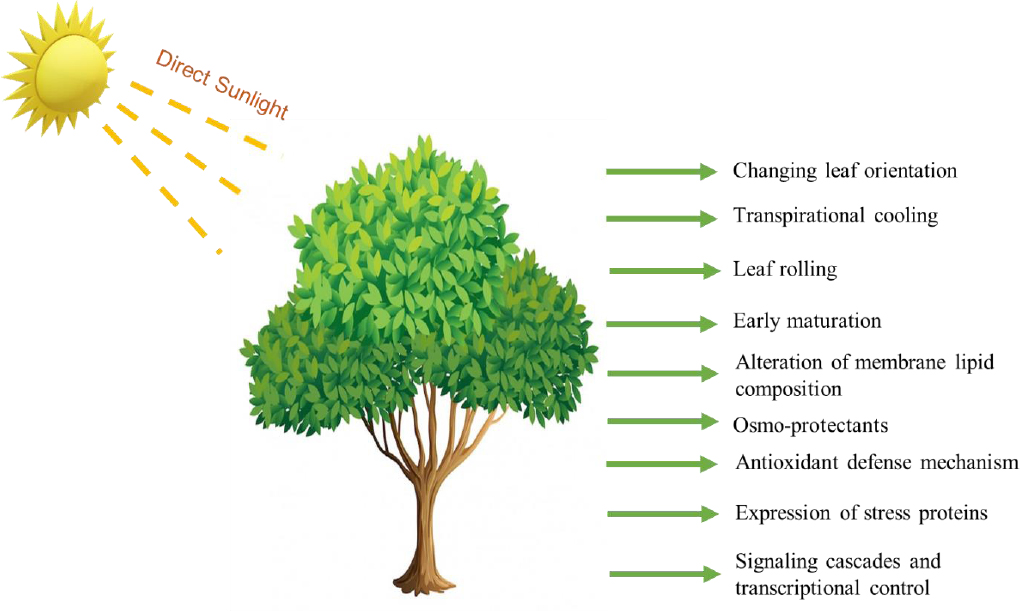
Adaptation mechanism of plants during HT.
3.2. Avoidance Mechanism
However, the plants are capable of undergoing several adaptations to enable them to exist in the temperatures as depicted below. Such strategies include long-term evolutionary phenological/morphological changes on the one hand and, on the other hand, momentary/genetic heat-shock or cold-shock reactions such as changing the orientation of the leaves, cooling by transpiration, or changing the lipid content of membranes. A number of authors have found that heat stress leads to coarsening of xylem vessel elements, enhanced density of stomata and trichomes, stomatal closure, and reduced water loss [24]. Due to this escape mechanism, most crop plants develop early at high temperatures, which results in slightly reduced yields [25]. The very first mechanism that plants can adopt as a way of avoiding heat stress is by absorbing reduced solar radiation because they are located in hot zones. The structures that encourage this ability are cuticles, which are a waxy layer protecting leaves, and tomentose, microscopic hairs that constitute a thick layer on the exterior surface of the leaf.
Paraheliotropism is the tendency of leaf blades in these plants to align themselves parallel to solar rays and turn away from light. Leaf blade rolling is another method of reducing solar radiation. Plants with smaller leaves are likewise more resilient to heat stress than those with larger leaves because their smaller leaves enable faster heat evacuation to the ambient. Plants employ the same physiological and structural adaptation mechanisms that they use in conditions of water scarcity to limit transpiration. Well-hydrated plants may withstand heat stress due to effective transpiration, which causes the leaves' internal temperature to decrease by as much as 6 °C or even 10–15 °C below the surrounding air. Some ways to do this are taking leaves off the plants, leaving only heat-resistant buds, or cutting flowers such as desert annuals all the way through their reproductive cycle in autumn and winter.
For example, pineapple plants have developed several adaptive mechanisms to cope with heat stress. Because pineapples use CAM photosynthesis, they can minimise water loss by opening their stomata at night while still absorbing CO2. This adaptation is especially helpful in dry, hot weather. Pineapple leaves have a thick, waxy cuticle that helps to keep the plant cooler by reflecting excessive sunlight and minimising water loss. Even in hot weather, pineapples can effectively collect water from the soil because of their large but shallow root system. Osmolytes such as proline and glycine betaine, which support cellular turgor and protect cellular structures from heat stress, are accumulated in pineapples [26].
When a plant is actively growing, it is quite vulnerable to temperature stress. Some kinds of terrestrial plants are more heat-tolerant in the summer, whereas some species are most tolerant in the winter when they are dormant. Dormant plants become stress-tolerant when they enter a growth stage triggered by factors other than high ambient temperature. Numerous types of terrestrial plants show little variation in their ability to withstand heat. It can be challenging to minimise the impact of either stressor on field-grown plants because HT and drought are closely related stresses. Thus, plants' adaptations to arid environments are only beneficial if they help them avoid or withstand both types of stress.
3.3. Tolerance Mechanism
Most often, the term heat tolerance refers to a plant’s ability to develop and produce under hot conditions. This is indeed a very specific property; a certain tissue or organ within a particular plant species can have very different tolerance thresholds than organs or tissues of a closely related species. Using a number of strategies to enhance their respective survival and growth rates within their environment, plants possess relatively high mean temperatures. These behaviors fall into one of two categories: they may be the longer-term evolutionary adaptations or shorter-term avoidance and acclimatory strategies. To mediate against the effects of stress, the following stress tolerance components are essential: ion transporters, Late Embryogenesis Abundant (LEA) proteins, osmoprotectants, antioxidants, and defense molecules in the transcription factors and signaling pathways [27].
In brief heat stress situations, processes such as transpiration, adjustment of leaf orientation with respect to the light, and modulation of membrane lipid content are important [28]. Reducing yield losses during early summer maturation could indicate a potential escape mechanism in heat stress resistance. Various plant tissues have different levels of intricacy, extent, and reaction to different types of applied or commonly encountered stress [29]. The initial stress signal, such as an osmotic or ionic action, or even alterations in membrane fluidity, sets up the stress response system. Provided evidence for the importance of restoring balance, defense, and repairing proteins and membranes [30].
3.4. Accumulation of Osmolytes
Under HS, plants accumulate a wide range of low-molecular-mass compounds to improve their chances of survival. Osmolytes are a broad group of low-molecular-weight compounds [31]. To combat heat stress, plants accumulate various osmolytes, such as sugars, proline, ammonium, and sulphonium compounds [32]. In general, the accumulation of osmolytes supports plant stress physiology by shielding cellular structures and promoting plant survival under stressful conditions [33]. One of the important compatible solutes in plants, owing to its important function under a wide range of stresses, including salinity and high temperatures, is GB (glycine betaine), an amphoteric quaternary amine.
In addition, proline is found in significantly higher concentrations in a number of plant species that are exposed to stress factors than in those that are not. Wahid and Close (2007) identified the functional importance of compatible solute accumulation; heat stress induces soluble sugars accumulation, and proline production may stabilize cellular redox potential under heat and other environmental stresses [34]. Many plants intended for fruit production failed at high temperatures because sugar metabolism and proline transport are interrupted during the limited period of male reproductive development. Because hexoses are produced in high quantities in such engineered disaccharide-forming transgenic plants as fructans, mannitol, and trehalose, hexose sensing may provide a significant contribution to stress-tolerant phenotypes in plants [33].
Non-protein amino acid γ – 4 – aminobutyric acid (GABA) is present in many biological systems and was chosen as the appropriate solute for the systems. GAD (Glutamate decarboxylase) is an enzyme that catalyses the one-step conversion of glutamic acid to GABA. This implies that the main enzyme in the synthesis of GABA, GAD, becomes active at an acidic pH. Exposure to HT increases the cytosolic Ca level, which causes calmodulin to activate GAD [35]. The kinetics of GABA in plants exhibit the stress accumulation pattern; this is a physiological function of the plant to protect against stress effects. It may be a crucial step in the sequence of events whereby the perception of the stressor leads to rapid changes in the synthesis of GABA in stressed tissues.
3.5. Cell Membrane Thermostability
Heat stress significantly impacts photosynthesis and respiration, leading to increased membrane permeability. For these cellular functions to remain effective under stress, cellular membranes must maintain their integrity. Heat stress increases the rate of molecular transport across the membranes, changing the biomolecules and destabilizing the biological membranes. This leads to either an increase in the proportion of unsaturated fatty acids or denaturation of the proteins in order to increase the fluidity of the lipid bilayer [36]. Tertiary and quaternary structures of membrane proteins are damaged to enhance the disruption and biological action of the membrane, together with the permeability of the membrane and leakage of electrolytes. The degree of electrolyte leakage varies in tissues, organs, developmental and age stages, and seasons. The point where further loss occurs is detected by the overall solute leakage, which also represents heat stress tolerance in terms of CMT (Cell membrane thermostability). This is an indication that the heat tolerance of the plant decreases when the mature leaves of the plant have a higher amount of saturated fatty acids, as it increases the plasma membrane melting point. In contrast, in some species, no association between the lipid saturation levels and heat tolerance was found, implying that there are factors other than membrane stability that may limit development at increased temperatures [37]. Although each stressor has specific effects, many abiotic stresses activate a similar or the same location; for instance, they target the membrane system that is vital for several life-supporting activities.
4. MITIGATION STRATEGIES TO OVERCOME HIGH-TEMPERATURE STRESS
4.1. Mulching
Conserving soil moisture is a crucial approach that might work for plant growth in high-temperature stress conditions. Mulching is an important tool for preserving the moisture and temperature balance in the soil system, but there are other strategies to preserve soil moisture as well. Mulches aid in regulating transpiration, which maintains the canopy's temperature. By reflecting and dispersing radiative heat, the use of low-density, organic, reflective mulches like straw lowers the surface radiation while preserving moisture. By lowering both total incoming radiation and advected heat, shading cloths are employed to provide partial shading [38]. Additionally, organic mulches increase the overall performance of plants by conserving soil moisture and enhancing the water use efficiency and nitrogen use efficiency.
4.2. Water Management
Water scarcity is closely associated with Heat Stress (HS), making effective water management crucial for enhancing crop productivity under such conditions. Plants that transpire efficiently are more capable of withstanding high temperatures. Many crops can tolerate temperatures up to 400C if adequately watered; however, insufficient water leads to leaf dehydration, significantly reducing overall yield. Water-stressed plants conserve moisture by closing their stomata, which decreases evaporative cooling. In the absence of this cooling, leaf temperatures can soar to 500C, further decreasing productivity, as high temperatures severely disrupt plant physiological functions [39].
To mitigate these effects, best practices in water management include:
(1) Irrigation Timing: Applying water based on environmental conditions, water availability, and critical growth stages maximizes productivity and minimizes HS impacts. Irrigating before or during heat waves can prevent heat stress and sunburn [40].
(2) Irrigation Techniques: While meeting the evapotranspiration requirements of plants, the water vapour pressure deficit and tissue temperature can be reduced by using suitable irrigation techniques, such as misting, sprinkling, and overhead watering.
Overall, optimizing irrigation practices is essential for reducing heat stress and ensuring sustainable crop production.
4.3. Use of Antitranspirants
Antitranspirants are chemicals that reduce the transpiration rate when applied to the leaf surface, and as a result, the water potential of the plant is increased [41]. It is a chemical, and depending on the type, the range of transpiration rate will vary from 80% to 0%. It is already being used in horticultural crops to overcome the impact of heat stress. Based on the categories, there are four known antitranspirants (Table 1), namely reflective antitranspirants, film-forming antitranspirants, metabolic or stomata-closing antitranspirants, and growth retardant type antitranspirants [42].
| Classification of Antitranspirants | Role of Antitranspirants |
|---|---|
| Reflective antitranspirant | By increasing leaf reflectivity, they lower transpiration and heat absorption. They reduce water loss and shield crops from extreme heat stress by reflecting sunlight. |
| Film-forming antitranspirants | These reduce the amount of water vapour escaping by forming a thin layer on leaf surfaces. They can lessen transpiration rates and increase the effectiveness of water utilisation. |
| Metabolic or stomatal closing antitranspirants | These substances force the microscopic holes on leaves, or stomata, to close, which minimises water loss. Plants are able to preserve water and stay more hydrated under stressful situations as a result. |
| Growth retardant type antitranspirants | Certain growth retardants decrease transpiration even if their main purpose is to restrict development. They influence water use indirectly by delaying plant development. |
4.4. Osmoprotectants
Osmoprotectants are compatible solutes, or low-molecular-weight molecules, that stabilize cell membranes, proteins, and osmotic potential under stressful conditions. As a result, they help crops that are subjected to heat stress. A key factor that helps to improve plant function during heat stress is salicylic acid. Spraying of SA decreases electrolyte leakage, increases antioxidant activity, and develops a grape's resistance to heat stress [43]. SA controls photosynthesis and Rubisco activity in grapevines under heat stress and lessens the negative effects of high temperature stress on PS-II [44]. Similar to this, additional osmoprotectants have also demonstrated beneficial effects in crops exposed to heat stress, including grapes, apples, peaches, pears, and plums [45].
4.5. Selection of the Right Cultivars/varieties
It is advisable to select perennial fruit species that are well-suited (Table 2) to the elevated temperatures anticipated in the designated area. Mechanisms for withstanding heat and drought include a deep root system, leaf shedding, water binding, thorn presence, leaf orientation, rolling and vertical leaf position, and a well-formed canopy. Fruit crops that grow well in hot climates include ber, pomegranate, aonla, fig, tamarind, bordi (Ziziphus species), karonda, and Indian fig [38].
| Crop | Heat- or Drought-tolerant Cultivars | References |
|---|---|---|
| Pomegranate | Ruby | [46] |
| Annona | Arka Sahan | [46] |
| Banana | Karpooravalli and Kathali | [46] |
| Strawberry | Elsanta, KHope and Camarosa | [47] |
| Peach | BR1 Chimarita, Tropic Beauty, and Atens | [48] |
| Fig | Black Mission, Kadota, and Dessert King | - |
| Aonla | NA-7, Krishna, Chakaiya | [49] |
| Ber | Umran, Gola, Seb | - |
4.6. Identification of Appropriate Rootstock
Heat tolerance in plants through breeding techniques can be improved by creating variation in varieties for both biotic and abiotic problems. Breeder care in this area of research: the use of rootstocks with heat or drought stress tolerance (Table 3) has received wide use in fruit production systems around the world.
| Crop | Rootstock | References |
|---|---|---|
| Apple | M7, MM111, KC-1, KC-1-48-41, KC-14, Mark and M26 | [50] |
| Peach | Monegro, Pema, Paramount, Garnem, Barrier 1, PeDa and Cadman. | [51] |
| Plum | Myrobalan ‘P.2175’ | [52] |
| Grapes | Borner, 140Ru, 110R, Hybrids of V. berlandieri x V. riparia | [53, 54] |
| Citrus | Rangpur lime, Marmalade orange, and Rough lemon | [55] |
| Pomegranate | Daneshgah 13, Daneshgah 32, and Daneshgah 8 | [56] |
| Mango | Gomera-1 and Kensington Pride | [57] |
There are three main resistance mechanisms in plants:
- Morphological Resistance: This includes aspects such as root structure, root length, root width, and root hairs.
- Biochemical Resistance: This is done by creating positive osmotic conditions for plants so that they can cope with stress.
- Physiological Resistance: This involves the synthesis of compounds such as phenolic acids, toxins, and tannins that help prevent stress effects.
4.7. Technologies for Early Detection and Monitoring of Heat Stress
Timely detection of heat stress is critical for effective management in perennial fruit crops, particularly during the most thermosensitive stages of pollination and early fruit development. Conventional monitoring methods relying on fixed meteorological stations often fail to capture the spatiotemporal variability of thermal stress within orchards [58]. Recent advances in precision agriculture now offer a suite of technologies for real-time, high-resolution heat stress detection and monitoring [59]. Remote sensing, particularly the use of Thermal Infrared (TIR) imagery from drones (UAVs), satellites, and aircraft-mounted sensors, has emerged as a powerful tool for mapping canopy temperature at the orchard scale [58]. Thermal cameras mounted on UAVs can detect early heat-induced stomatal closure and canopy overheating with high spatial resolution, enabling site-specific irrigation or shading interventions before visible stress symptoms appear [59]. Satellite-based platforms such as Landsat and Sentinel-3 provide broader landscape-level temperature mapping useful for regional heat wave monitoring and inter-annual comparisons of heat exposure in fruit-growing regions [58]. Vegetation indices derived from multispectral imagery, including the Crop Water Stress Index (CWSI) and canopy-to-air temperature differentials, serve as indirect proxies of heat stress severity in field conditions [58].
In-crop sensor networks represent another scalable approach to real-time heat stress monitoring [59]. Wireless sensor nodes deployed within orchards can measure air temperature, leaf surface temperature, relative humidity, Vapour Pressure Deficit (VPD), and solar radiation at multiple canopy positions simultaneously [58]. These sensor arrays, connected through Internet of Things (IoT) infrastructure and low-power wide-area networks (LoRaWAN, NB-IoT), enable continuous logging and automated alerts when threshold temperatures are exceeded during pollination or fruit cell division stages [59]. Integration of these data streams with crop phenological models allows growers to anticipate stress windows and implement timely protective measures such as overhead irrigation, evaporative cooling, or kaolin clay application [39, 40]. In addition, electrochemical and optical biosensors are being developed to detect early biochemical stress markers (e.g., reactive oxygen species, chlorophyll fluorescence) in plant tissues, offering near-real-time physiological stress assessment at the plant level [60].
A particularly important and underappreciated challenge in perennial fruit crops is distinguishing the cumulative effects of heat waves from variability between warm and non-warm years and understanding how such inter-annual variation intersects with alternate bearing cycles and other perennial-specific phenomena such as viviparity [4]. Perennial fruit crops accumulate thermal stress across multiple seasons; a single heat wave event during flowering in one year may suppress return bloom, alter flower sex ratio, or deplete carbohydrate reserves in ways that reduce yield one or even two seasons later [14, 15]. Monitoring programmes for perennial orchards must therefore track not just current-season heat events but also the long-term thermal history of individual trees and orchards [61]. Long-term weather records linked to phenological databases, combined with machine learning algorithms trained on multi-year yield and quality data, offer a promising framework for distinguishing between year-to-year climate variability and the cumulative stress signatures that underlie alternate bearing and irregular fruit development in perennial systems [59]. Development of standardized heat stress indices specifically calibrated to the phenological calendar of major fruit crops is a priority research need for enabling meaningful cross-site and cross-season comparisons [58].
5. CHANGE IN THE RESPONSE OF PHYTOHORMONES UNDER STRESS CONDITIONS
Phytohormones are small signalling molecules that plants employ to regulate their growth and development in response to a range of internal and external stimuli. Promoting the hormones that facilitate the regulation of nutrient transport, growth, and development, and linked source/sink modifications [62]. Natural chemicals manufactured by plants, referred to as phytohormones, boost the plants’ ability to cope with life as trapped beings [63]. Plant hormones are substances like gibberellins, salicylic acid, auxin, cytokinins, abscisic acid, ethylene, brassinosteroids, and jasmonates, all of which have an impact on the growth of plants in one way or another. Strigolactones (SLs) are newly identified plant hormones that were described several years ago [64].
The phytohormone and stress hormone known as ABA (Abscisic acid) is required by plants in order to counter environmental stress. Most of the work conducted on ABA has been centered on its role during abscission, the process of shedding of fruits and leaves. The ABA regulates many physiological processes such as seed germination, stomatal opening during embryo development, and synthesis of storage proteins and lipids. Isoprene is synthesized through the 2-C-Methyl-D-erythritol-4-phosphate pathway in plastids. The hormone that alters the genome and activates signaling pathways is ABA, and this hormone accumulates to high levels under abiotic stress [65]. It is a cell’s signal for one’s survival in severe conditions and controls a little over ten percent of the genes that produce proteins. ABA, in response to water scarcity, reduces leaf growth and other water conservation mechanisms, including stomatal closure. Nitrogen deficiency and water stress responses, as well as root growth, rely on it. Furthermore, ABA improves drought resistance by increasing the production of antioxidant enzymes, osmoprotectants, protective proteins, and genes that respond to stress [66]. Additionally, when exposed to salt stress, its concentration increases [67].
Research on auxin has continued for almost a century, yet still very little is understood regarding its synthesis, transport, or signaling pathways. Important pathways that are either tryptophan-dependent or independent have been found [68]. The multifunctional phytohormone indole-3-acetic acid coordinates the growth, development, and defense responses of plants [69]. Due to its presence in single-celled green algae, auxin machinery may have evolved to aid plants in their adaptation to land. Auxin has a crucial role in root and shoot proliferation in salty environments. Both the reception and the transmission of stress signals are influenced by the interplay between hormones. To better handle both biotic and abiotic stress, auxin enhances transcription of the major auxin response genes. Improving crucial crops' resistance to abiotic stress may be as simple as discovering new stress-responsive genes.
Many plant growth and developmental processes are controlled by Cytokinins (CKs), which are also known as master regulators [70, 71]. Abiotic stresses, such as dehydration and salinity, cause them to alter their CK levels. The effects on agricultural output and stress tolerance are substantial in mutant and transgenic plants with altered CK metabolism [72]. While much research on CKs has focused on their extrinsic administration, stress can also raise endogenous CK levels via production and active absorption [73]. In order to improve seed germination, CKs counteract Abscisic Acid (ABA), a hormone that encourages seeds to remain dormant [74]. An increase in apical dominance and the facilitation of drought adaptation through ABA-mediated stomatal regulation occur when water-stressed plants experience a decrease in CK levels and an increase in ABA accumulation, which raises the ABA/CK ratio [65].
Ethylene is a gaseous hormone that is essential for fruit ripening, flower wilting, and leaf and petal abscission [75]. The amino acid that synthesises this hormone is AdoMet (S-adenosyl-L-methionine). AdoMet is then converted to 1-aminocyclopropane-1-carboxylic acid (ACC) by ACC synthase, and ACC is converted to ethylene by ACC oxidase. The process of ethylene synthesis can be impacted by cold and salt stress; however, as production increases, it becomes more resilient to these pressures [76]. Particularly important in conditions of heat stress, ethylene synthesis boosts plant efficiency. The ethylene signal transduction system includes this hormone, which has an effect on genes [77]. Ethylene also reacts to salicylic and jasmonic acids, extra hormones that regulate plants' resistance to diseases and pests. Furthermore, in development processes, ethylene and abscisic acid (ABA) can function both independently and together [78].
As tetracyclic diterpenoid carboxylic acids (Gibberellins - GAs), they play a crucial role in plant development. The three main types of GA1, GA3, and GA4 affect various aspects of a plant's life cycle, including flower and fruit growth, stem and leaf development, and seed germination [79, 80]. Not only that, GAs react to environmental stresses and contribute to how plants deal with them [81]. Phytohormones have an impact on Ethylene (ET) at various points in development; the direction of this effect is tissue- and signaling-environment-dependent.
Brassinosteroids (BRs) are recent plant hormones; they were identified in the pollen of rape plants (Brassica napus). BR has over 70 structural forms; the three most biologically active are 24-epibrassinolide, 28-homobrassinolide, and brassinolide. BRs affect flowering, fruit ripening, stem growth, and root development. BRs decrease the effects of abiotic stresses such as heat, cold, salinity, drought, waterlogging, chemicals, and toxins [82]. They also manage antioxidants with the aim of reducing oxidative stress. Further studies are needed to better understand their synthesis, development, responses to stress, and relationships with animals, fungi, and microbes.
The cyclopentanone phytohormones known as Jasmonates (JAs), which include Methyl Jasmonate (MeJA) and Jasmonic Acid (JA), are produced by the breakdown of membrane fatty acids. They influence reproductive traits, flowering response, fruiting, leaf senescence, secondary metabolites, and resistance to pathogens. They influence reproductive factors, flowering, fruiting, senescence, secondary metabolites, and defense against pathogens. They are essential for the plant life cycle and abiotic stress responses [83, 84]. JAs are mainly engaged in immunological responses to infections and different environmental challenges such as salinity, drought, and low temperatures [85]. They promote abiotic stress tolerance and reduce metal stress by stimulating the antioxidant system [86]. For instance, using MeJA increases resistance to heavy metal stress by accumulating phytochelatin [87].
In pathogen infections, plants synthesize proteins in response to SA (salicylic acid), a naturally occurring polyphenol [88]. Consistent with earlier research [89, 90], SA enhances plant development, maturation, and stress resistance. The synthesis of SA involves both Isochorismate (IC) and Phenylalanine Ammonia-Lyase (PAL); however, IC is more widely utilised in some crops and exhibits greater activity at low concentrations, whereas high concentrations can be toxic to cells. Together, SA and ABA regulate stress-response genes, such as PR1 and PR2, in response to water scarcity. Responses to heat, cold, drought, and salinity are influenced by SA [91]. Thus, further studies are needed to clarify the genetic mechanisms underlying the contribution of SA to stress tolerance.
Strigolactones (SLs) are apocarotenoids that were identified more than 45 years ago because of their ability to promote the germination of root-parasitic plants, such as witchweed and broomrapes [92]. One plant species can synthesise several kinds of SLs, and the same species can contain different levels of SLs [93]. Although SLs are mainly formed and released from the roots, they can also be formed in other plant structures. SLs influence the overall structure of synthetic SLs; for example, GR24 can influence natural strains and chimeric lateral root growth, but not mutants or SL-synthesising plants [94]. Microbe–plant interactions and bioactive rhizobial signals induce legume nodulation [95, 96]. SLs have played a role in plant evolution in response to abiotic factors, helping to adjust shoot and root architecture [97]. As crop signal molecules, SLs act as master regulators of adaptive developmental changes in response to various conditions, showing potential agricultural applications, such as stimulating the germination of dormant seeds that rely on other plants for nutrition [98].
To summarize, a generalized hypothesis that can be drawn is a signaling-receptor concept (Fig. 5) of plant hormones in abiotic stress.
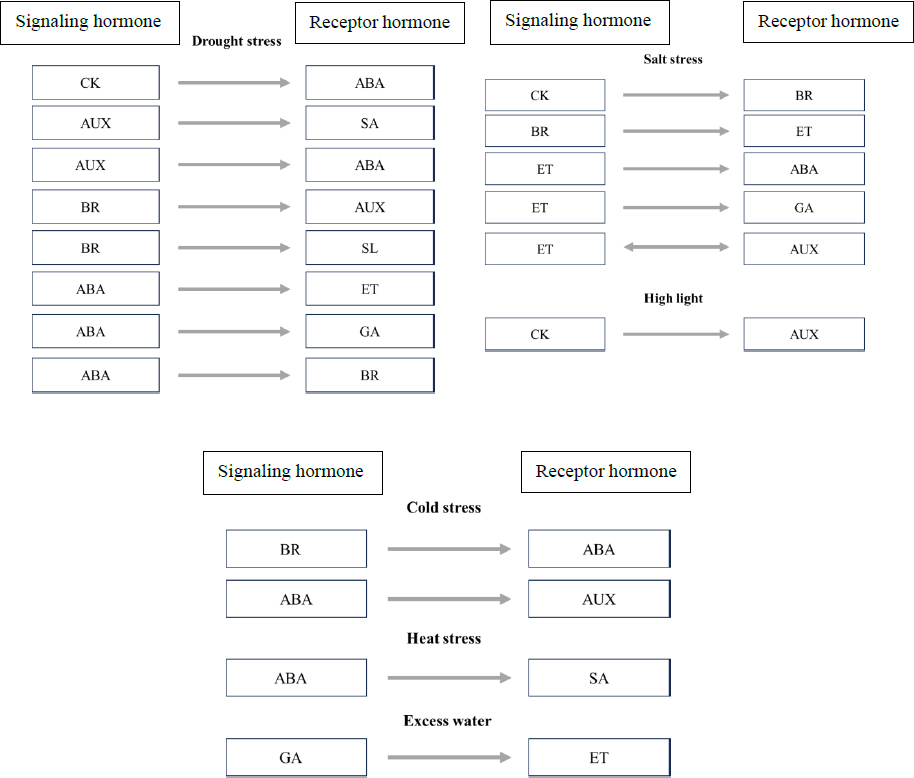
The role of phytohormones and the crosstalk between phytohormones in Signalling under stress conditions, CK- Cytokinin; AUX- Auxin; BR- Brassinosteroids; ABA- Stress hormone; ET- Ethylene; SA- Salicylic acid; GA- Gibberellic acid; SL- Strigolactones.
Triazoles, such as paclobutrazol, play a crucial role in helping fruit crops tolerate heat stress by modulating hormonal balances. They increase the levels of cytokinins and the stress hormone Abscisic Acid (ABA), which play significant roles in coping with adverse conditions, and reduce ethylene production, which is often associated with stress responses. Triazoles also help reduce transpiration-related water loss by controlling stomatal closure. This is especially beneficial under heat stress, when water availability may not meet crop requirements. Triazoles influence carbohydrate metabolism, thereby supplying a constant source of energy for growth and adaptation to stress. They also support plant development and productivity under conditions that are not always favourable [99]. In addition, they enhance the activities of antioxidant enzymes, such as catalase, peroxidase, and superoxide dismutase. By scavenging Reactive Oxygen Species (ROS) generated under adverse thermal conditions, these enzymes help prevent oxidative damage to crop cells [99]. Heat-Shock Proteins (HSPs) and other protective protein-encoding genes are among the stress-responsive genes whose expression can be modulated by triazoles. This can increase crop resistance to thermal stress in general.
Polyamines, such as spermidine, spermine, and putrescine, play crucial roles in helping fruit crops cope with heat stress. Polyamines increase the ability of plants to withstand heat stress by protecting cell membranes and other cellular components. Plants can activate their defense mechanisms because polyamines influence genes involved in stress responses [100]. They also play roles in regulating fruit ripening, fruit set, and quality. Polyamines interact with heat stress, reducing postharvest deterioration and thus enhancing fruit quality. Polyamines interact with other crop regulators and signalling molecules to promote overall crop growth and maturation, even under stress [101].
6. OMICS STRATEGIES IN DEVELOPING HEAT STRESS TOLERANCE
As fruit crops are perennial, have extended juvenile periods, and have strong genotype × environment interactions, using omics techniques in heat stress studies in fruit crops requires cautious interpretation. Omics-derived responses in fruit crops must be assessed in the context of multi-year phenology, fruit quality features, and rootstock–scion interactions, in contrast to annual crops, where stress-responsive genes may frequently be directly related to yield within a single season. Finding heat-responsive genes or metabolites is only one aspect of the true value of omics approaches in fruit crops; another is connecting these molecular signatures to stable physiological performance, reproductive resilience, and consistent fruit yield and quality throughout the growing season [60]. To understand crop responses to abiotic stress, it is required to study genes, RNAs, proteins, metabolites, and traits to enhance breeding efforts. Various omics-genomics, transcriptomics, proteomics, metabolomics, and phenomics provide multilayered information about plant biology, aiding in improving crop resilience and resistance to environmental stress. Numerous genes have been identified as crucial for combating heat stress through gene activity and genetic evaluations [102]. MicroRNAs, or non-coding RNAs, play an important role in regulating post-transcriptional gene expression [103]. In molecular research, microRNAs are vital for understanding plant heat-stress tolerance mechanisms. Various microRNAs contribute to osmolyte accumulation in response to HT. Stress-downregulated microRNAs enhance heat-stress tolerance by increasing the accumulation of their target RNAs, whereas stress-upregulated microRNAs do not target specific RNAs. Understanding microRNAs' roles in transcriptome homeostasis, developmental plasticity, and cell tolerance facilitates the development of heat stress-tolerant varieties through genetic modification. The analysis of gene expression patterns triggered by heat stress may now be done with great advantage because of the development of microarray technology [104]. Of particular relevance to perennial systems is the impact of sporadic extreme events such as heat waves, which impose acute supraoptimal temperature stress during physiologically critical windows. In grapevines (Vitis vinifera), heat wave events have been shown to trigger rapid transcriptomic reprogramming involving the upregulation of hundreds of Heat Shock Factor (HSF)-regulated genes, altered anthocyanin biosynthesis pathways, and suppression of berry sugar accumulation, with multi-omics studies linking these molecular events to accelerated ripening, colour loss, and reduced wine quality [105]. In citrus, transcriptomic and metabolomic analyses following heat wave exposure have identified heat-responsive pathways including carotenoid degradation, flavonoid pathway suppression, and activation of ROS-scavenging networks; these molecular signatures correlate with the characteristic peel disorders, preharvest fruit drop, and delayed colour break observed after heat wave events in commercial groves [61]. In nut crops such as pistachio and almond, heat waves during hull split and kernel filling have been associated with shell staining, kernel browning, and yield loss, with proteomic and transcriptomic profiling revealing activation of Late Embryogenesis Abundant (LEA) proteins, dehydrins, and alternative oxidase pathways as key thermotolerance determinants [104]. These crop-specific omics insights underscore the necessity of studying heat wave responses in perennial species under realistic field conditions rather than extrapolating from controlled-environment studies.
6.1. Genomics and Transcriptomics
Genomics detects genes activated or suppressed in response to stress, including those involved in signal transduction, stress recognition, and defense mechanisms. It reveals how genes interact and cooperate to regulate stress responses, aiding the development of highly resilient plants. Genomic research uncovers genetic variations linked to stress tolerance, facilitating the breeding or modification of more resilient crops. Transcriptomics is a subfield of genomics that seeks to identify new genes and pathways that are responsive to stress by studying the effects of stress on genes. The use of genomics and marker-assisted selection has greatly improved and expedited the process of breeding stress-tolerant crops. In addition, tools such as CRISPR-Cas9 improve the targeted modification of stress-related genes, which in turn increases the resilience of field crops to abiotic stress [104]. Many heat-responsive genes in fruit crops, among them those encoding heat shock proteins, transcription factors, and antioxidant enzymes, have been effectively identified by genomic and transcriptome investigations; nevertheless, the application of these discoveries to breeding results is still restricted. Gene expression reactions to heat stress in perennial fruit crops are frequently quite stage-specific, varying between vegetative growth, blooming, and fruit maturation. Furthermore, because of seasonal fluctuation and cumulative stress exposure, transcriptome responses shown under controlled settings would not reliably predict field-level thermotolerance. To guarantee biological significance, transcriptome data in fruit crops must be interpreted in conjunction with long-term phenological observations and yield stability metrics [105].
6.2. Proteomics
Proteomics helps identify proteins with differential expression in response to stress, including those involved in signalling, stress perception, and defense. Hence, it enables the analysis of PTMs (post-translational modifications), which regulate protein functions, stability, and interactions under stress. By identifying relationships between proteins, proteomics provides insights into how proteins contribute to stress tolerance, thereby facilitating the development of stress-tolerant crops [106]. This approach links changes in protein abundance with physiological responses and provides information on how plants regulate cellular functions and metabolic processes during stress. Comparative proteomic analyses of stress-tolerant and stress-sensitive crops can help distinguish stress-responsive proteins and pathways that may be exploited in crop breeding. Research on roots is particularly useful because roots are involved in nutrient and/or water uptake strategies, which can reveal specific adaptations that improve plant performance under stress conditions [107]. Proteomic reactions to heat stress in fruit crops serve as a useful link between transcriptome alterations and physiological function. However, proteomic research has shown that transcript levels are not always closely correlated with protein abundance and post-translational changes, especially in situations of chronic heat stress. Proteomic modifications related to membrane stabilization, oxidative stress reduction, and protein folding are particularly crucial for preserving fruit development and postharvest quality in perennial fruit species. As a result, proteomics provides important insights into fruit crop thermotolerance processes, but its usefulness is only maximized when combined with physiological markers such as fruit firmness, photosynthetic efficiency, and storage performance [108].
6.3. Metabolomics
Metabolomics comprehensively analyses metabolites and can therefore identify metabolites that change in response to abiotic stress. Changes in metabolite concentrations indicate which metabolic pathways are upregulated or downregulated, helping to interpret plant adaptation to stress conditions. It also defines biomarkers of stress tolerance that can be used to evaluate plant stress status or select stress-tolerant varieties [109]. Metabolomics demonstrates how certain amino acids, sugars, and organic compounds accumulate in stressed plants to restore hormonal equilibrium [110]. Combining metabolomics with other omics approaches, including genomics, transcriptomics, and proteomics, provides a more comprehensive understanding of plant stress responses from a systems-biology perspective. The increase in sugars, organic acids, amino acids, and secondary metabolites has been identified by metabolomic investigations in fruit crops as an essential element of heat stress adaptation. Crucially, a lot of these metabolites have a direct impact on fruit quality characteristics like firmness, sweetness, acidity, and scent. However, interpretation is complicated since metabolite profiles under heat stress frequently show both stress resistance and stress damage. Therefore, to differentiate adaptive responses from signs of metabolic disturbance in perennial fruit crops, metabolomic signatures must be assessed in connection with fruit developmental stage and harvest maturity [109].
6.4. Phenomics
Phenomics involves the use of computational imaging coupled with sensors for rapid and precise quantification of plant phenotypes under stress conditions, allowing large populations to be screened for the development of stress-tolerant cultivars. This approach integrates phenotypic data with genotypic data to identify QTLs associated with stress tolerance, which can support breeding programmes [58]. Continuous monitoring reveals how plant traits change over time and which features are critical for stress accommodation. When integrated with proteomics, metabolomics, transcriptomics, and genomics, phenomics provides a holistic understanding of plant responses to stress [59]. AI and machine-learning techniques provide a means of refining predictions related to plant breeding and improving breeding outcomes. Root phenotyping enables the assessment of root architecture and function, which are essential for improving stress-resistant crops. In fruit crops, where heat tolerance is expressed through complex traits, including canopy architecture, fruit retention, sunburn resistance, and yield stability across years, high-throughput phenomics is particularly useful. By capturing genotype × environment interactions that are challenging to resolve through molecular techniques alone, phenomics allows for the non-destructive monitoring of these traits under field circumstances. Phenomics offers a potent foundation for selecting fruit crop genotypes that are thermotolerant and perform steadily under varying temperature regimes when combined with genomes and transcriptomics [58].
CONCLUSION
Heat stress is the second most significant abiotic stress after drought; however, plant physiologists generally acknowledge that the two stresses cannot be considered independently. The crop-wise impacts of heat stress across 19 major and minor fruit crops are summarised in Table 4. Heat stress negatively affects the development, yield, and overall condition of fruit plants. Hence, high temperatures are a significant concern, exacerbated by the recent increases in both the frequency and intensity of heat stress. Addressing this challenge will be important in the future. There is an urgent need to evaluate wild relatives of crops and other related species as potential rootstocks for improving heat resistance. Efforts should also be intensified to develop heat-tolerant varieties through conventional breeding and biotechnological approaches. Management practices have been identified as effective strategies for mitigating heat stress in fruit crops. A model illustrating the effects of heat stress on physiological characteristics based on research findings to date is presented in Fig. (6).
| Crop | Effect | References |
|---|---|---|
| Apple | • Decrease in fruit firmness, water core development, acid concentration, and reduced skin colour • Early blooming and fruit maturation • Slower anthocyanin biosynthesis • Splitting of fruit and bitter pit |
[5, 14, 15, 61] |
| Pear | • Water core disorder • Enzymatic inactivation and inhibition of protein synthesis • Reduced photosynthesis and nutrient uptake • Leaves- scorching, yellowing, leaf fall • Reduced fruit size, colour and general standard of the produce |
[17, 8, 10] |
| Peach | • Smaller fruit dimensions and production | [20] |
| Plum | • Accumulation of proline and phenols • Accumulation of MDA and activation of GPOD. • Inactivation of reaction centers, which leads to stronger ROS formation • Decreased yield |
[23] |
| Apricot | • Decreased pistil size • Abnormal flowers • Decreased fruit set and yield |
[17] |
| Strawberry | • Develops Albinism • Develop pink or white colour in the surface, and the pulp remains pale |
[19] |
| Kiwi fruit | • Reduced TSS, fruit dry mass, and delayed fruit ripening • Increased fruit firmness, and both the core and cortex tissues of the fruits had increased starch concentration |
[5, 6] |
| Avocado | • Reduced CO2 assimilation • Stomatal conductance and CO2 • Extreme heat shuts down photosynthesis • Sunburn damage in fruit |
[51] |
| Litchi | • Affects sex ratio and reproductive development • Affects flowering and promotes vegetative growth • Reduced root and shoot growth, fruits and leaves are affected by sunburn damage • Drying of shoots, stems, and fruit drops • Appearance of dark blotches without any damage to the pulp |
[20] |
| Grapes | • Delays bud sprouting, poor fruit set due to reduced pollen tube growth and pollen viability • Reduced fruit quality with increased TSS and low acidity • Berry discolouration and leads to pink berry disease |
[22, 105] |
| Custard apple | • Affects fruit setting | [16] |
| Citrus | • Lower fruit set and diminished produce development, size, and leads to preharvest drop • Increases fruit acidity and decreases fruit peel thickness • The start of colour break during maturation was delayed and led to fruit splitting and creasing |
[18] |
| Banana | • Impact on moisture level of the foliage, ion leakage, and hydrogen peroxide (H2O2) levels • Decreased days for bunch development and maturity • Reduced leaf area and yield • Sunburn and bunch choking |
[111] |
| Mango | • Reduced photosynthetic efficiency • Decreased water and transpiration potential • Late panicle emergence and a higher percentage of hermaphrodites • Reduced pollen viability and fruit set |
[112, 113] |
| Papaya | • Female sterility and functional male • Reduces the petiole length, leaf dimension, shoo.jpgtd overall plant weight • New protein synthesis, which aids in seed shell softening and sprouting • Helps in breaking dormancy |
[114, 115] |
| Guava | • Poor fruit set | [116] |
| Pineapple | • Leads to translucent disorder | [113] |
| Ber | • Inhibit photosynthesis • Denaturation of photosynthetic enzymes and proteins • Induces the production of ROS • Increase the pace of transpiration, leading to greater water depletion • Disrupting the uptake of essential nutrients leads to nutrient deficiency • Can modify the concentration of plant growth regulators. |
[117] |
| Aonla | • This leads to reduced chlorophyll content and impaired photosynthetic efficiency • Oxidative stress can result in damage to cell membranes and reduce cell viability • Heat stress at the flowering stage is particularly harmful |
[49] |
| Pomegranate | • This can result in reduced water availability for the plant, causing wilting and reduced turgor pressure • Which can cause significant damage to the pericarp (fruit skin) • It is prone to heat damage in high temperatures • Sunburned fruits often have a poor appearance and reduced marketability |
[118, 119] |
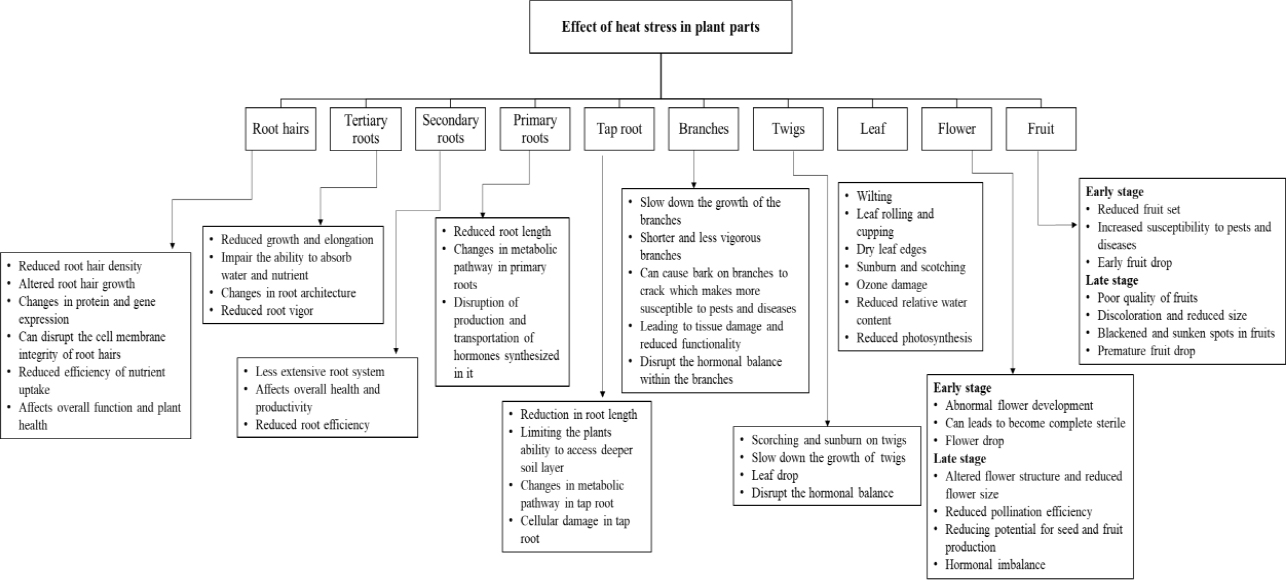
A concise model outlining the physiological effects of high-temperature stress on plants and their parts.
FUTURE THRUST OF RESEARCH
Heat stress in perennial fruit crops is an intensifying challenge that demands targeted, multidisciplinary research. Based on the critical gaps identified in this review, the following five specific research priorities are recommended for future investigation. (1) Functional characterization and field validation of heat-responsive genes: Although genomic and transcriptomic studies have identified numerous heat-stress-responsive genes in fruit crops, including those encoding Heat Shock Proteins (HSPs), transcription factors (HSFs), and antioxidant enzymes, their functional roles under realistic field conditions remain largely unvalidated. Priority should be given to CRISPR-Cas9-mediated functional editing and overexpression studies in fruit crop species such as mango, citrus, grape, and apple to confirm gene function and evaluate agronomic performance across multiple seasons. (2) Development of heat-tolerant cultivars and rootstocks through integrated breeding platforms: Conventional breeding for heat tolerance in perennial fruit crops is slow due to long juvenile periods. Accelerated breeding frameworks combining genomic selection, marker-assisted backcrossing, and speed breeding under controlled temperature regimes should be developed and standardized for priority fruit species. Simultaneously, systematic evaluation of wild relatives and underutilized species as potential heat-tolerant rootstock donors is urgently needed. (3) Establishment of orchard-level heat stress monitoring and early-warning systems: Integrated sensor networks combining in-canopy microclimate sensors, UAV-based thermal imaging, and IoT-enabled real-time communication platforms should be developed and validated in commercial orchards across diverse fruit crops. Standardized heat stress indices calibrated to the phenological calendars of major fruit crops are needed to enable cross-site, cross-season, and cross-species comparisons. (4) Quantification of multi-season carry-over effects of heat stress on yield and quality: The legacy effects of single or repeated heat wave events on carbohydrate reserves, alternate bearing, flower viability, and fruit quality across subsequent seasons remain poorly quantified for most perennial fruit crops. Long-term longitudinal field experiments are required to separate heat-wave impacts from background year-to-year climatic variability and to model cumulative thermal stress effects on orchard productivity. (5) Optimization of integrated agronomic management strategies: While individual practices such as mulching, kaolin application, antitranspirant sprays, and precision irrigation have been evaluated separately, their combined and interactive effects under realistic field heat stress scenarios are insufficiently understood. Multi-factor, multi-location trials examining optimized combinations of water management, canopy management, exogenous protectants, and rootstock-scion pairings are required to develop evidence-based, crop-specific management protocols for heat-resilient fruit production systems under changing climatic conditions.
AUTHORS’ CONTRIBUTIONS
The authors confirm their contribution to the paper as follows: B.: Prepared and submitted the manuscript; S.K.: Performed conceptualizing, analysing, and correcting the paper; U.: Did overall alignment and grammatical correction; S.: Performed content editing of the review paper; G.: Aligned and prepared for the submission. All authors reviewed the results and approved the final version of the manuscript.
LIST OF ABBREVIATIONS
| ABA | = Abscisic Acid |
| ACC | = 1-Aminocyclopropane-1-Carboxylic Acid |
| AdoMet | = S-Adenosyl-L-Methionine |
| AI | = Artificial Intelligence; AUX: Auxin |
| BR | = Brassinosteroids; |
| CRISPR-Cas9 | = Clustered Regularly Interspaced Short Palindromic Repeats-Associated Protein 9 |
| CK | = Cytokinin |
| CMT | = Cell Membrane Thermostability |
| CO2 | = Carbon Dioxide |
| CWSI | = Crop Water Stress Index |
| ET | = Ethylene |
| FAOSTAT | = Food and Agriculture Organization Corporate Statistical Database |
| GA | = Gibberellic Acid GABA: Gamma-Aminobutyric Acid |
| GAD | = Glutamate Decarboxylase |
| GB | = Glycine Betaine |
| GR24 | = Synthetic Strigolactone Analogue |
| H2O2 | = Hydrogen Peroxide |
| HSF | = Heat Shock Factor |
| HSP | = Heat Shock Protein |
| HT | = High Temperature |
| HS | = Heat Stress |
| IC | = Isochorismate |
| IoT | = Internet of Things |
| JA | = Jasmonic Acid |
| LEA | = Late Embryogenesis Abundant |
| LoRaWAN | = Long Range Wide Area Network |
| MDA | = Malondialdehyde |
| MeJA | = Methyl Jasmonate |
| NB-IoT | = Narrowband Internet of Things |
| PAL | = Phenylalanine Ammonia-Lyase |
| PS-II | = Photosystem II |
| QTL | = Quantitative Trait Locus |
| RBP | = Rubisco Binding Protein |
| ROS | = Reactive Oxygen Species |
| RUE | = Radiation Use Efficiency |
| Rubisco | = Ribulose-1,5-Bisphosphate Carboxylase/Oxygenase |
| SA | = Salicylic Acid |
| SL | = Strigolactone |
| TIR | = Thermal Infrared |
| TSS | = Total Soluble Solids |
| UAV | = Unmanned Aerial Vehicle |
| VPD | = Vapour Pressure Deficit. |
ACKNOWLEDGEMENTS
The authors hereby acknowledge the support given by Karunya Institute of Technology and Sciences, Deemed University, for the preparation and submission of the manuscript. The first author wishes to acknowledge the support received through the scholarship.