All published articles of this journal are available on ScienceDirect.

Microbial Metabolites in Agriculture: Promises and Limitations

Abstract
This review analyses the growing field of microbial metabolites in agriculture, moving beyond the widespread narratives to evaluate the scientific foundations, efficacy claims, and ecological implications of their widespread application. This article discusses the widespread benefits of using microbial metabolites in agriculture to enhance plant physiology, biochemistry, and defense. The biocontrol agents protect crops through direct and indirect mechanisms, including direct antagonism, resource competition, and niche exclusion at root infection sites. Furthermore, they also activate innate plant immunity via Induced Systemic Resistance (ISR) and Systemic Acquired Resistance (SAR). By recognizing Pathogen-Associated Molecular Patterns (PAMPs), these metabolites trigger defense hormones such as salicylic acid, jasmonic acid, and ethylene and also prompt the synthesis of defense proteins. While live microbes are sensitive to environmental shifts, the benefits of isolating their pure metabolites and formulating biopesticides help standardize doses and offer extended shelf lives. While microbial metabolites offer a “green” alternative to synthetic agrochemicals, the current research landscape is often characterized by reductionist “single-strain, single-metabolite” approaches and a significant lack of comprehensive environmental impact studies. Here, we have also discussed progress in metabolite discovery through omics technologies, re-evaluated the often-overstated efficacy of these compounds in plant growth and defense, and assessed the ecological consequences, including soil microbiome disruption and associated risks such as horizontal gene transfer. We propose a framework for (i) efficacy validation across environments, (ii) ecological risk assessment endpoints, and (iii) regulatory monitoring priorities and ethically guided precision agricultural solutions to fully harness the potential of microbial metabolites for a sustainable future.
1. INTRODUCTION
Meeting the increasing food demands of a growing human population while also mitigating the serious environmental damage caused by traditional farming practices presents an unprecedented dual challenge in the world's agricultural landscape [1]. For decades, chemical fertilizers and synthetic pesticides have been the mainstays of agricultural productivity. The use of agrochemicals increased the economic efficiency of agricultural production systems after the Green Revolution. Although these inputs have undeniably increased yields, they have come at a huge cost to ecosystem health. Overdependence on them has resulted in increased soil salinization, decreased soil fertility, and extensive environmental pollution, including water contamination and biodiversity loss [2]. Pesticides transition from aquatic life to animals and humans, causing biomagnification that results in fatal diseases like cancer, diabetes, kidney diseases, etc [3]. Since these synthetic agrochemicals are linked to health and environmental hazards, it has been felt that to achieve sustainability in agriculture, we may need an alternative plant disease control measure. Hence, the spread and severity of a range of crop diseases can be mitigated by using environment-friendly alternatives such as microbe-based products (whole organisms or their metabolites), which may substitute chemical pesticides [4]. Moreover, several bacterial and fungal bioherbicides have shown potential for weed control, but they have limitations, including a restricted range of action, their persistence in the environment, and regulatory issues that limit their commercial availability. Therefore, current research focuses on utilizing cell-free microbial metabolites, which are easy to handle and have a wide range of applications [5].
Microbial metabolites have emerged as a promising approach to meet this requirement. Eukaryotic and prokaryotic microbes produce small compounds with molecular weights less than 1000 Daltons during their metabolism; these compounds are collectively called metabolites [6]. They may be polar (dissolving in water), nonpolar (not dissolving in water), or volatile, and may be endogenously or exogenously produced. They may be categorized as primary or secondary metabolites based on their function. The metabolites associated with fundamental processes such as growth, development, and energy metabolism are called Primary metabolites, and they are produced during microbial proliferation. On the other hand, secondary metabolites are not essential for immediate survival but provide adaptive advantages for a wide range of microorganisms [7]. They are produced when cells reach the stationary phase, often induced by stress or nutritional deficiencies. Several bioactive compounds, including amino acids, lipids, carbohydrates, organic acids, alkaloids, phenolics, peptides, polyketides, Volatile Organic Compounds (VOCs), antibiotics, pigments, toxins, etc. are naturally produced by microorganisms like bacteria, fungi, and actinomycetes. These are proven effectors of symbiosis and ecological competition, enzyme inhibitors, immune modulating agents, pheromones, receptor antagonists and agonists, antitumor agents, pesticides, and growth promoters [4, 8, 9]. Apparent advantages of these metabolites include increased crop yield, better soil structure, enhanced plant immunity, improved nutrient cycling, and reduced reliance on synthetic chemical inputs. These characteristics of microbial metabolites make them essential for developing more resilient and sustainable agricultural systems [10]. Microbial metabolites can be deployed for crop improvement through diverse modalities, including Cell-Free Supernatants (CFS), Live Inoculants (LI), Purified Metabolites (PMs), or Synthetic Microbial Consortia (SMC).
The market for agricultural microbes is expanding rapidly, and by 2028 it is estimated to reach 13.9 billion dollars [8]. The main drivers of this expansion are the growing demand from consumers and policymakers for organic crop products, increasing risks of biotic and abiotic threats, the urgent need for climate change adaptation plans, and the global emphasis on sustainability [11]. However, this rapid commercialization often overlooks the comprehensive validation and rigorous scientific understanding required for such intricate biological interventions. Although the potential of microbial metabolites in agriculture is unquestionable, a thorough analysis reveals a landscape full of unresolved complexities and oversimplifications.
The fundamental flaw in most of the current research is the overemphasis on “single-strain, single-metabolite” approaches, which are usually carried out in extremely controlled laboratory or greenhouse settings [12]. When these products are used in real-world field applications, the inherent variability in soil types, climatic conditions, and the dynamic interplay with diverse native microbial communities frequently results in inconsistent or marginal outcomes compared to isolated interactions [13]. The very idea of broad applicability is undermined by this ecological mismatch between simplified experimental conditions and the complex realities of agroecosystems, posing a serious obstacle to obtaining consistent and predictable results.
Furthermore, in the rapid rush for microbial solutions, the severe lack of comprehensive environmental impact studies is often overlooked. The equilibrium of soil microbial communities is disturbed when high densities of viable microbes or their concentrated metabolites are present. This is not just an additive process; it can trigger a chain reaction of competitive displacement, in which the native populations are outcompeted or disrupted by introduced microbes, potentially upsetting the delicate equilibrium of the native soil microbiome. Beyond simple community shifts, there are also concerns about changes in the soil's basic functional capabilities and, more concerning, the horizontal spread of undesirable genetic traits, such as virulence factors and Antibiotic Resistance Genes (ARGs), to native soil populations or even to human pathogens [14]. The long-term fate and ecological consequences of these introduced compounds and organisms, including their persistence, accumulation, and subtle yet significant off-target effects on non-target organisms and soil biogeochemistry, remain largely under-documented and insufficiently assessed within current research and regulatory frameworks [15]. The emphasis on reaping immediate agricultural benefits more than thorough, long-term ecological risk assessment makes this “unseen ecological footprint” a challenge.
In this review article, we methodically dissect the present status of microbial metabolite research in agriculture. A comprehensive systematic search was conducted across major electronic bibliographic databases, such as PubMed, Web of Science, and Google Scholar, published between 2010 and 2026 to capture both fundamental studies and recent advancements in the field. The review examines the empirical data supporting efficacy claims, critically assesses the potential and constraints of sophisticated omics technologies in metabolite discovery, and most importantly, sheds some light on the ecological implications of applying microbial metabolites that are often overlooked. Here, we have adopted a censorious yet constructive approach to discuss the high expectations from microbial metabolites, which are usually motivated by commercial interests but frequently ignore the empirical data and a clear understanding of mechanisms, identify important knowledge gaps, and suggest a more ecologically integrated, rigorously scientific, and ethically conscious path for the development and use of microbial metabolites in sustainable agriculture. The authors acknowledge that the review is a narrative summary rather than a systematic approach and may be biased, as the studies selected were based on relevance.
1.1. The Discovery of Metabolites and the Omics Revolution
Technology breakthroughs have significantly impacted the search for and characterisation of agriculturally beneficial microbial metabolites. Although the foundation was laid by early research, the opening of wider horizons and highlighting significant gaps in our knowledge were made possible by the development of high-throughput omics technologies.
1.2. The State of Metabolite Discovery Today: Advantages and Methodological Drawbacks
For many years, culture-dependent methods were employed to discover microbial metabolites, wherein the microorganisms were separated from environmental samples and cultivated in lab media to look for bioactive substances in the supernatants or cellular extracts [12]. However, this approach has a built-in and well-known bias, as very few environmental microorganisms (less than 1%) are considered easily cultivable in a typical lab setting [16, 17]. The vast majority of microbial diversity and their potential metabolic repertoire are still unknown due to this large unculturable majority, which constitutes a significant limitation in harnessing the full metabolic potential of uncultured microbial communities [18]. Culturomics innovations help in changing metabolite discovery output in several ways. The microbial dark matter, which specifically refers to the countless number of unculturable microorganisms that hold great potential for harboring novel Natural Products (NPs), can now be isolated from specialised environments using high-throughput spectrometry (like MALDI-TOF). For example, teixobactin, a novel depsipeptide antibiotic with a unique scaffold, has been discovered following the successful cultivation of Eleftheria terrae using iChip [19].
A small fraction of the whole metabolic capacity found in natural agricultural settings is showcased by the early discoveries, such as the compounds with insecticidal, fungicidal, nematicidal, biofertilizer, and plant growth-promoting activities [8], including CFSs from Serratia marcescens and Fictibacillus spp. that showed antifungal efficacy and increased wheat growth [20]. Beyond simple identification, the cultural constraints severely restrict our understanding of the ecological roles and the actual functional diversity of microbial metabolites. The precise contributions of these organisms, their interactions within complex communities, or how their metabolic outputs affect plant health and ecosystem dynamics cannot be determined. As a result, a vast, functionally significant portion of the microbial world remains a mystery and the current understanding of microbial metabolites in agriculture remains on the data of few culturable species.
1.3. Multi-omics Integration: Opportunities and Risks for Gaining useful Knowledge
Advancements made in genome sequencing technologies, together with effective bioinformatics tools, have helped unveil the metabolic potential of many microbes. The expansion of high-throughput omics procedures, such as metabolomics, transcriptomics, proteomics, and genomics proved efficient in overcoming the limitations of the classic cultivation-dependent techniques to study specialized metabolites (Fig. 1).
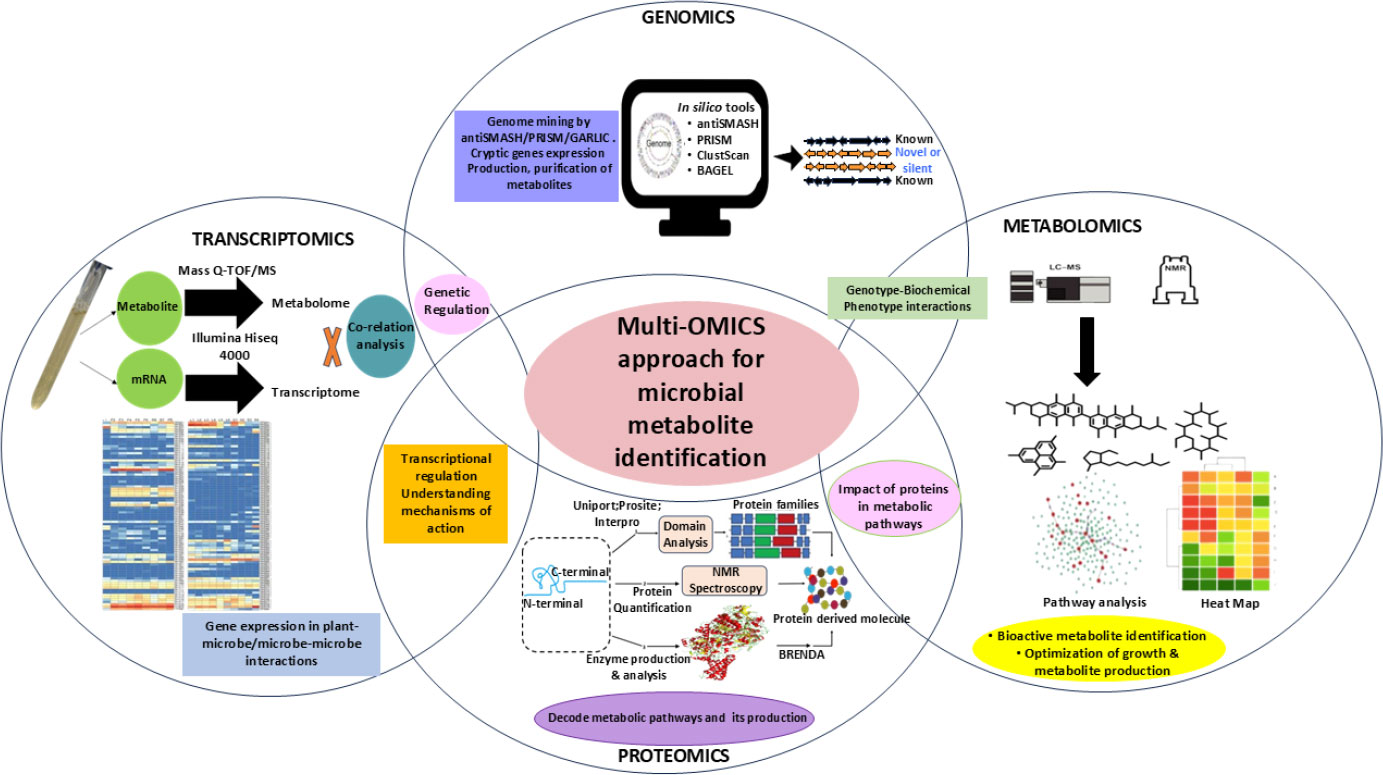
Schematic representation of omics workflow for microbial metabolite discovery. The workflow depicted includes the experimental procedures used within genomics, transcriptomics, proteomics, and metabolomics.
The modern discovery pipeline follows a systematic progression:
1.3.1. BGC Prediction (Genomics and Mining)
The availability of high-quality whole-genome sequences has been enabled by the development of Next-Generation Sequencing (NGS) technologies, which reveal the potential metabolic landscape of microbes [21]. Genome mining tools such as the antibiotics and Secondary Metabolites Analysis SHell (anti-SMASH) [22, 23] and the connected antiSMASH database [24], Prediction Informatics for Secondary Metabolomes (PRISM) [25, 26], GlobalAlignment for natuRaL-products chemInformatiCs (GARLIC), Generalized Retrobiosynthetic AssemblyPrediction Engine (GRAPE) platform [27] have been improved with more features to predict and assign functions to enzymes involved in secondary metabolites biosynthesis, and establish the link between Biosynthetic Gene Clusters (BGCs) and their cognate natural products [28]. Analysis of a typical actinomycete genome sequence reveals that it harbors an average of 30 secondary metabolite gene clusters, indicating its theoretical genetic potential to produce 10 times higher numbers of secondary metabolites than currently identified through screening and chemical analysis [29]. Genome mining analysis of a rare marine actinomycete, Streptosporangium sp. CGMCC 4.7309 has predicted gene clusters of a new family of polyketides- Hexaricins [30]. In 1989, a potent antitumor agent, Leinamycin, was reported from Streptomyces atroolivaceus S-140, but subsequent efforts failed to discover any analogues. However, in 2017, a study utilized genome mining of actinobacteria to reveal 49 potential new producers of Leinamycin-type natural products [31].
1.3.2. Expression Evidence (Transcriptomics and Proteomics)
Although a large number of BGCs in a majority of microbes have been discovered using DNA sequencing data, their actual products still remain uncharacterized. In general, these clusters remain silent under laboratory conditions due to the complex regulation at the levels of transcription, translation, and post-translational modification. The expression of such cryptic BGCs can be triggered to produce new natural products by using biological (co-cultivation), molecular, and chemical elicitors [32]. In a study, transcriptional analysis revealed that co-cultivation of the soil bacterium, Streptomyces coelicolor, with the competitor myxobacterial strain Corallococcus coralloides B035 led to increased production of undecylprodigiosin due to the increased expression of redH and redX genes [33].
In recent research, proteomics data have been used to explain the relationship among metabolic pathways and metabolite production. In a study, proteomic changes associated with lantibiotic NAI-107 production by Microbispora ATCC- PTA-5024 strain were analyzed, and it was found that at different growth stages, the morphological differentiation and antibiotic production are controlled by distinct regulatory mechanisms [34].
1.3.3. Chemical Identity and Quantification (Metabolomics)
Novel metabolites have been identified using a metabolomics strategy, too. In Streptomyces sp. MBT28, a prenylated isatin antibiotic that has an inhibitory role against Bacillus subtilis, was characterized using an NMR-based metabolomics strategy [35]. Similarly, in the extract of Streptomyces fradiae, a deep-sea actinomycete MM456M-mF7, two new bioactive compounds, a siderophore along with its derivative, namely fradiamines A and B, were reported and characterized by LC-HRESI- MS based non-targeted metabolomics [36].
1.3.4. In situ Relevance (Metagenomics and Beyond)
The use of metagenomics, metaproteomics, and metatranscriptomics provides a culture-independent approach to explore the hidden potential of unculturable microbes to produce metabolites [37, 38]. By avoiding the need for isolation and enabling the study of complex microbial communities in situ, these methods have transformed microbiology and have offered a methodical, worldwide perspective on the diversity, structure, and possible roles of microbial communities [12] as summarised in Table 1. Future integration of these methods with spatial metabolomics and Stable Isotope Probing (SIP) will further bridge the gap between metabolite production and functional relevance in complex ecological niches.
| Challenge Area | Specific Limitation/Issue | Impact on Metabolite Discovery and Understanding | Emerging Solutions/Approaches |
|---|---|---|---|
| Culturomics Gap | Less than 1% of environmental microbes are culturable; traditional methods are biased towards fast-growing species [39]. | The vast majority of microbial metabolic potential remains unexplored; the functional roles of unculturable “dark matter” are unknown. | Innovations in culturomics (diluted media, in situ cultivation, co-culturing, high-throughput isolation) [40]. |
| Data Complexity and Interpretation | Ambiguity in taxon assignments (short reads, multiple matches); compositional nature of data (relative vs. absolute); sparsity (technical zero counts) [41]. | Difficult to accurately identify specific microbes and quantify their true abundances; risk of erroneous conclusions. | Advanced bioinformatics tools; statistical models accounting for compositionality and sparsity [41]. |
| Functional Elusiveness | Disconnect between genetic potential and expressed function (gene presence vs. active role); limited functional annotation for many detected metabolites/proteins [42]. | Cannot definitively link what a microbe can do to what it is doing; difficulty in identifying causative mechanisms. | Multi-omics integration frameworks (AI/ML for data interpretation); improved functional annotation databases [43]. |
| Data Integration Challenges | Heterogeneity across omics platforms; missing data; difficulty capturing complex, non-linear interactions [44]. | Hinders holistic understanding of biological systems; complex interactions remain a functional black box. | Integrated multi-omics approaches; AI/Machine Learning for robust data synthesis [43]. |
| Bias and Database Reliance | PCR amplification biases; reliance on incomplete or biased curated databases [42]. | Skewed representation of microbial diversity; limits scope and accuracy of analyses. | Development of more comprehensive and unbiased reference databases; improved primer design. |
Metagenomics studies have highlighted the functional importance of these microbial partners, revealing that the number of enzymatic functions encoded in the plant microbiome greatly exceeds the plant's own enzymatic capabilities [45]. A novel class of calcium-dependent antibiotics, the malacidins, was discovered from environmental samples by amplifying conserved regions of biosynthetic genes of BGCS in these samples using degenerate PCR primers. The sequencing results were analyzed using the bioinformatics tool, environmental Surveyor of Natural Product Diversity (eSNaPD) [46]. In 2015, the use of the novel iChip in situ cultivation technique enabled the discovery of teixobactin, a potent new inhibitor of cell wall biosynthesis from a previously uncultured bacterium, Eleftheria terrae [47]. Later, the BGC of teixobactin was identified by genome sequencing of E. terrae and homology searches.
Despite their revolutionary potential, omics technologies pose varied challenges, especially when it comes to integration and interpretation of data. The complex data generated across various omics platforms are often hindered by missing data and the challenge of capturing non-linear interactions [44]. The following particular problems make it more difficult to convert unprocessed data into useful biological knowledge:
- Ambiguity in Taxonomic Assignments: Shotgun sequencing short reads might align with several genomes or not exactly match any reference genome, resulting in imprecise taxonomic classifications [41].
- Compositionality: Microbiome data inherently represent relative abundances rather than absolute counts; specific statistical methods are therefore required to avoid erroneous inferences that may be drawn regarding the actual numbers of microbial populations [41].
- Sparsity: A large percentage of zero counts in datasets may be technical artifacts rather than actual biological absences, which could potentially distort the analyses and restrict the use of common statistical models [41].
- PCR Amplification Bias: The affinity of the primers used in PCR varies for all DNA sequences; biases may be introduced, and the actual diversity and abundance of microbial communities may be misrepresented [42].
- Limited Functional Annotation: The exact origin and function of metabolites or proteins detected in complex environmental samples like soil are usually unknown. Furthermore, the functional roles inferred purely from metagenomics data may be inconclusive, as less than 2% of a genome usually codes for proteins [42].
- Database Dependence: The scope and precision of interpretations of multi-omics analyses are constrained by the extensive and carefully curated databases that these analyses rely on, which may be incomplete or biased [42].
This collective set of problems makes the connection between genetic potential and expressed function elusive. A gene or microbe's presence within a community does not confirm that it is actively involved or producing metabolic products in situ. Sequencing-derived taxonomic abundance is not always correlated with actual transcriptional activity or metabolic fluxes [42]. Due to this fundamental disconnect, researchers are frequently looking into a “functional black box” despite having access to huge omics datasets. Even though these technologies offer glimpses into the genetic potential and composition of microbial communities, establishing causality in dynamic, complex systems and conclusively connecting this data to real-time metabolic activity remains a great challenge. Although this field has the ability to map a microbiome's potential, its inherent limitations prevent it from creating a consistent picture of dynamic interactions and their exact metabolic outputs.
1.4. Advanced Analytical Techniques: Bridging Scales and Deciphering Chemical Crosstalk
Advanced analytical techniques have become increasingly important for overcoming the inherent limitations of omics data and bridging the gap between observed microbial diversity and its functional implications. The spatial localization and distribution patterns of endogenous molecules, including proteins, peptides, lipids, and metabolites, can be simultaneously determined from intact plant tissue sections by using Mass Spectrometry Imaging (MSI), a potent label-free analytical technique [48]. Researchers are exploiting the high sensitivity and molecular specificity of this technique to observe the complex chemical crosstalk occurring at the tissue or even cellular levels. For example, MSI has been used to locate phytoalexins on infected rice leaves infected with Magnaporthe oryzae [49], monitor nitrogen metabolism in root nodules [50, 51], and to determine the spatial distribution of stilbene phytoalexins in grapevine leaves upon infection with Botrytis cinerea [52]. Moreover, MSI can also map tomato stress-response metabolites or fruit flavor compounds, offering unprecedented spatial detail of metabolic processes [48].
Simultaneously, Synthetic Microbial Communities (SynComs) are becoming more popular as a controlled experimental bridge to fill the gap in biotic complexity between reductionist single-strain studies and the overwhelming complexity of entire microbial communities [12]. SynComs are deliberately assembled collections of known microbial species that are intended to be studied in controlled settings for particular interactions and functions. Compared to using wild inocula, this method allows researchers to systematically add or remove particular isolates or genes, thereby observing the effects that arise in a more straightforward and precise manner [12]. SynComs have shown promise in boosting soil health [53], disease resistance by inhibiting pathogen growth through antibiotic production and activation of plant immune responses, abiotic stress (like drought and salinization) resilience, and plant growth by promoting nutrient uptake, root development, and regulating hormone levels [54, 55]. Thus, reducing dependence on chemical pesticides and promote stability and productivity in agricultural ecosystems.
Although SynComs provide a controlled environment for manipulating and studying microbial interactions, and MSI offers unprecedented spatial resolution for in situ detection of metabolites, these methods are frequently regarded as distinct advancements. There is a significant gap between analytical and experimental synergy. While the precise location of metabolite production and accumulation within SynCom-inoculated plants can be validated by MSI, this complex spatial data generated by MSI can be interpreted by the simplified, yet ecologically relevant systems provided by SynComs. A better understanding of metabolite function and interactions in a controlled yet ecologically relevant manner would be made possible by the deliberate and regular integration into experimental designs, thereby going beyond isolated applications.
2. EFFECTIVENESS OF MICROBIAL METABOLITES IN PLANT GROWTH AND DEFENSE
The benefits of microbial metabolites in agriculture are extensive, ranging from direct physiological improvements in plants to intricate biocontrol systems against diseases and pathogens, as summarised in Table 2. A critical analysis, however, shows that the effectiveness of these substances is frequently context-dependent, and the claims made for many commercial products often exceed rigorous scientific validation.
| Metabolite Class/Microbial functional factors | Key Mechanisms of Action | Agricultural Applications | Associated Limitations/Challenges |
|---|---|---|---|
| Direct toxic/antagonistic metabolites | |||
| Antibiotics | Direct inhibition of phytopathogen growth [8]. | Biocontrol. | Risk of promoting antibiotic resistance in environmental microbes [68]. |
| Lipopeptides (e.g., Surfactin, Iturin, Fengycin) | Antibiosis (antifungal, antibacterial activity); disruption of cell membranes [8]. | Biocontrol (fungicidal, antibacterial, nematicidal). | Production and purification challenges (scalability, cost, excessive foaming during fermentation). Inconsistent field efficacy [69]. |
| Nutrient acquisition mediators | |||
| Siderophores | Iron chelation, solubilization of Fe and other metals (Mo, Mn, Co, Ni); competition with pathogens for iron [70]. | Biofertilizer (Fe uptake), biocontrol (pathogen suppression). | pH sensitivity affects Fe-siderophore complex formation; competition with other metal ions [71]. |
| Phytohormones (Auxins, Gibberellins, Cytokinins) | Promote root development, increase nutrient uptake efficiency, stimulate overall plant growth and vigor [10]. | Plant growth promotion, biofertilizer. | Inconsistent field efficacy (context-dependent, soil type, climate, competition, host genotype) [13]. |
| Exopolysaccharides (EPS) | Improve soil aggregation and water retention; biofilm formation [72]. | Soil health improvement, stress alleviation (drought). | Efficacy can be highly variable and context-dependent [13]. |
| Lytic Enzymes | Degrade pathogen cell walls; decompose organic matter [20]. | Biocontrol, nutrient cycling. | Efficacy can be highly variable and context-dependent [73]. |
| Signal/priming metabolites | |||
| Volatile Organic Compounds (VOCs) | Act as signaling molecules; attract beneficial organisms; repel pests and influence plant growth [8]. | Plant growth promotion, biocontrol, plant-pollinator interactions. | Understanding complex interactions and effects in open systems is challenging [67]. |
| Induced Systemic Resistance (ISR) Inducers | Prime the plant immune system for faster, stronger response to pathogens/stress [8]. | Plant defense enhancement, biocontrol. | Highly context-dependent; often triggered only under specific biotic/abiotic conditions, making it unpredictable [73]. |
| Stress-modulating enzymes | |||
| ACC Deaminase | Reduces the plant stress hormone ethylene, mitigating abiotic stress effects [74]. | Stress alleviation, plant growth promotion. | Efficacy can be highly variable and context-dependent [73]. |
2.1. Mechanisms of Action: Biocontrol Compounds and Phytohormones
Through a wide range of direct and indirect mechanisms, microbial metabolites influence defense responses, nutrient uptake, and plant growth. The beneficial effects of microbial metabolites on plants are displayed by a variety of sophisticated mechanisms. Direct antagonism, or antibiosis, is the primary mechanism by which microbes directly prevent the growth of plant pathogens by secreting a range of antibiotic compounds, including pyrrolnitrin, phenazines, pyoluteorin, 2,4-diacetylphloroglucinol, viscosinamide, iturins, tensin, hydrogen cyanide, and ammonia [8]. These microbes degrade the structural components of fungal cell walls or nematode cuticles, thereby killing the pathogen by secreting lytic enzymes such as chitinases, glucanases, proteases, and cellulases.
Competition is one of the primary mechanisms adopted by microorganisms to inhibit the growth of plant pathogens, whereby the microbes sequester resources rather than direct pathogen destruction. These mechanisms typically involve active competition for essential ecological niches, including infection sites on plant roots [54] and limiting nutrient availability [56]. For example, the microbes produce an iron-chelating molecule called “Siderophore” that suppresses pathogen development by limiting the availability of iron to it, while providing a parallel supply of iron to the host plant and thus promoting plant vigor [8]. However, the formation of ferric ion-siderophore complexes is sensitive to pH. The efficacy of siderophores is compromised in heterogeneous soils where iron bioavailability fluctuates, and other metal ions compete with iron. Additionally, competition by siderophores necessitates high metabolic energy expenditure by the host to maintain iron homeostasis.
Similarly, microbial metabolites trigger the plant's own innate defense systems by activating defense pathways such as Induced Systemic Resistance (ISR) and Systemic Acquired Resistance (SAR), making the host plant less susceptible to pathogen attacks [8], but often carry substantial fitness costs for the host plant. In this process, the plant receptors recognise the Pathogen-Associated Molecular Patterns (PAMPs), thereby triggering signalling cascades that involve key defense hormones like Salicylic Acid (SA), Jasmonic Acid (JA), and Ethylene (ET), and the subsequent synthesis of defense proteins [57]. However, hyperactivation of these pathways may negatively affect plant growth and yield as the primary resources are diverted for defense.
Plant Growth Promotion (PGP) is a broad category encompassing several mechanisms. The efficacy of these mechanisms remains highly variable across different environmental contexts and plant genotypes. Beneficial microorganisms regulate plant growth and development by producing growth-promoting phytohormones, including auxins (Indole-3-acetic acid, IAA), Gibberellins (GA), and Cytokinins (CK) [58]. IAA synthesis by bacteria, for instance, directly enhances root development and nutrient uptake, contributing to overall plant resilience [59]. Plant Growth-Promoting Rhizobacteria (PGPR) can also produce ACC deaminase, an enzyme that reduces the levels of growth-inhibitory ethylene in plants, thereby promoting root development and overall plant growth [60]. But inconsistent rhizosphere colonization by PGPR often limits its practical efficacy in field conditions [61]. Furthermore, Exopolysaccharides (EPS) synthesized by microbes facilitate their attachment to plant surfaces, promote biofilm formation, and provide protection against various environmental stresses [40].
Certain microbial metabolites can disrupt pest development and reproduction. These compounds can affect critical processes such as molting, metamorphosis, or reproduction by interfering with insect hormonal regulation. For example, compounds like decoyinine and nerolidol can mimic or block juvenile hormone (JH) pathways, leading to developmental stunting or sterility in insect pests [8].
VOCs, which mainly include alcohols, ketones, terpenes, and other carbon-containing compounds (acetoin and 2,3-butanediol), are usually produced during the growth and reproduction of some antagonistic microorganisms. These compounds have a strong bacteriostatic effect but at the same time have the ability to induce plant growth, increase crop yield, and activate defense responses [62-64]. They can retard the growth or even kill post-harvest pathogenic bacteria on fruits and vegetables by synergistic action [65, 66]. However, evaluation of the effects of these VOCs in non-destructive soil samples such as those of subalpine forest soils is challenging [67]. Molds (Fungi) produce a variety of VOCs that are commonly used in food processing, pharmaceutical production, and in the decomposition of organic matter (Fig. 2) (Table 2).
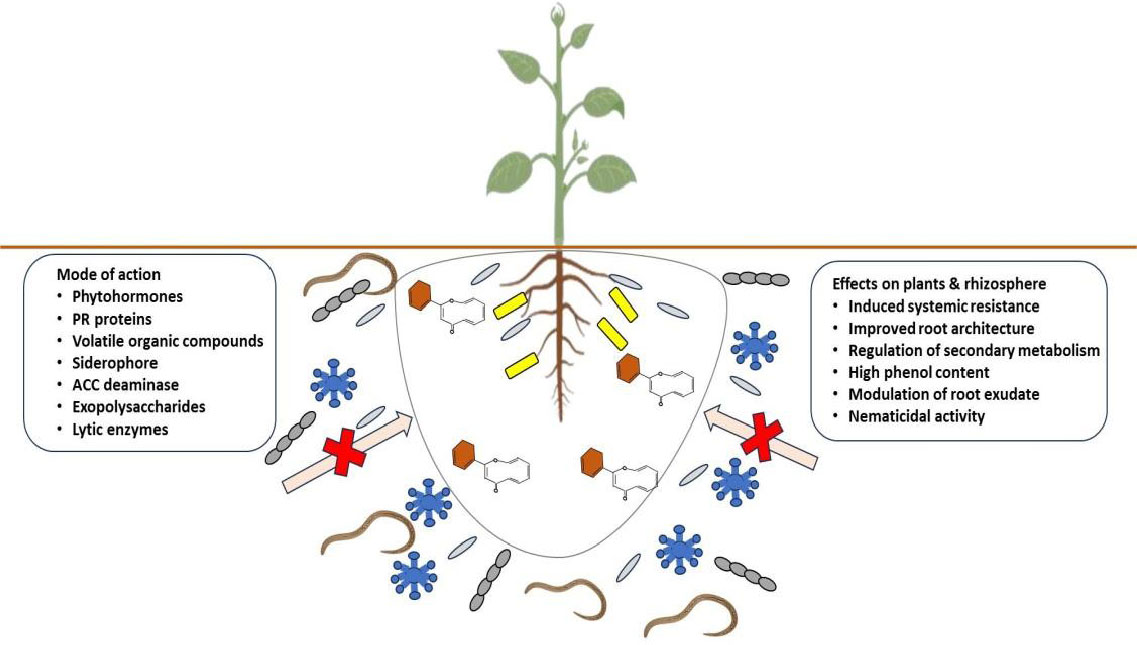
Mechanism of action of microbial metabolites against plant parasites.
A sophisticated and integrated approach to plant health is required- moving away from purely “lethal” functions toward multifaceted modes of action mediated by microbial metabolites. The strong emphasis on mechanisms like ISR, phytohormone modulation, nutrient cycling, and stress tolerance indicates a significant conceptual shift in plant protection [40]. In this new paradigm, focus has shifted from simply eliminating the pest to a biological partnership model in which microbial metabolites enhance the plant’s intrinsic resilience, optimise and improve its physiological processes and the growth environment, which is completely in accordance with the principles of sustainable agriculture.
2.2. Bridging the Promise of the Lab with Field Reality
Despite their varied and promising modes of action, the microbial metabolites used in agriculture are questioned for their variable effectiveness in a range of field settings compared to their performance in a greenhouse or controlled laboratory. Many products that display great prospects in simplified experimental settings often fail to deliver consistent results across diverse soil types and climatic conditions (Fig. 3). This variability significantly hampers their widespread and dependable adoption by farmers [13].
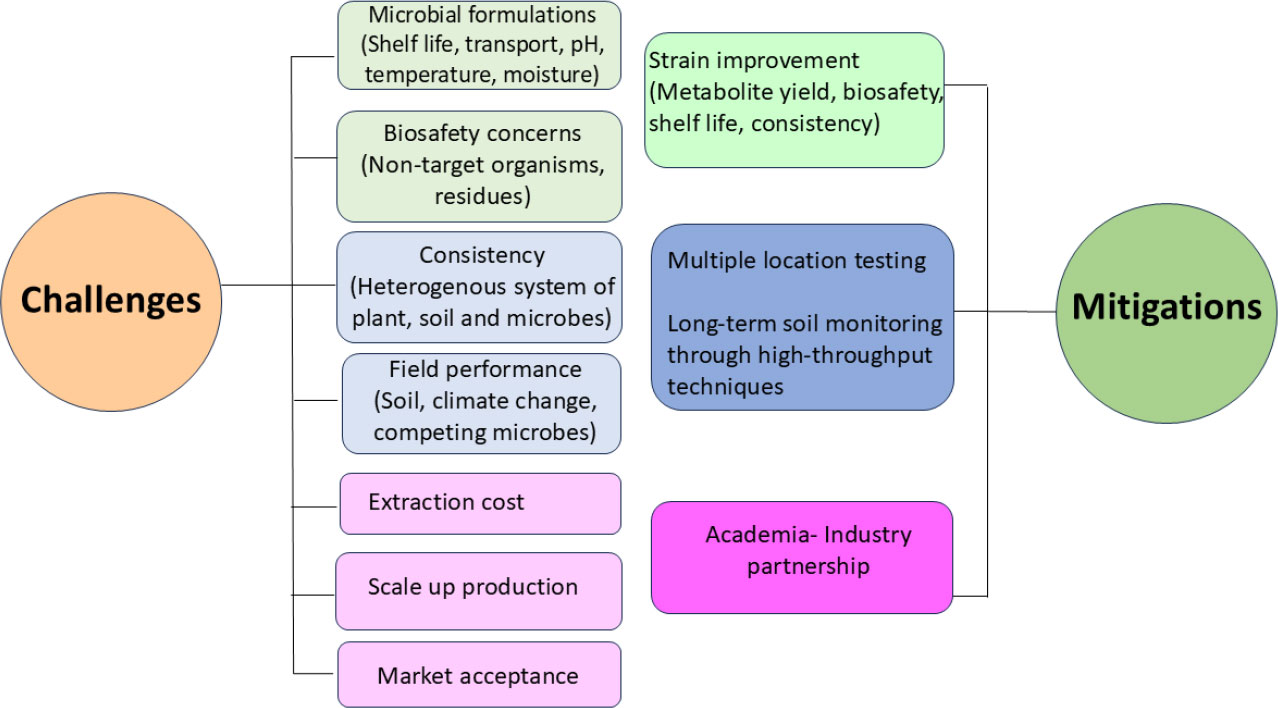
Bridging the Gap: The translational pipeline of microbial metabolites from laboratory discovery to agricultural field application.
Several factors contribute to this observed inconsistency:
- Climate and Soil Type: Abiotic factors such as soil pH, moisture content, temperature, and nutrient availability significantly impact the survival, establishment, and metabolic activity of introduced microbes [13]. A strain that is optimized for one kind of soil might perform poorly in another.
- Competition from Native Microbes: Often, the introduced microbial strains have to face fierce competition for nutrients and niche space from the diverse and established native soil microbiota. As a result of this competition, the effectiveness and persistence of the inoculated organisms may be reduced [13].
- Host Genotype: Due to differences in root exudate profiles and plant cell surface receptors, different plant genotypes may interact with microbial inoculants in different ways. This implies that efficacy can not only differ greatly between crop species but also between cultivars of the same species [13].
- Methods of Formulation and Application: Different ways of formulation of a microbial product (e.g., carrier selection, additive presence) and their application technique (e.g., seed treatment, soil drench, foliar spray) significantly impact their viability, stability, and successful field establishment [40].
A fundamental problem in the commercial landscape of agricultural biologicals and biostimulants is that marketing of these products often exceeds the actual research [75]. Vague and exaggerated claims are often made without sufficient support from independent experiments or clear, scientifically supported mechanistic evidence [10]. For example, claims of “inducing resistance” or “regulating growth” often do not undergo the thorough regulatory assessment required by the U.S. EPA, which would necessitate verified mechanistic data to support such claims (U.S. Environmental Protection Agency, 2021). This reveals a crucial divide between scientific validation and commercial rhetoric. The widespread variability in the efficacy of microbial metabolites under field conditions is a systemic problem that originates from an ecological mismatch between natural agroecosystems and controlled experimental settings. Commercially driven broad-spectrum claims that frequently lack rigorous, context-dependent mechanistic validation further exacerbate this mismatch, leaving farmers doubtful and hindering the wider adoption of genuinely beneficial microbial solutions.
2.3. Overlapping Roles and Functional Ambiguity: Distinguishing Biostimulants from Biocontrol Agents
The market's explosive growth and diversification for microbial products have yielded a significant conceptual and regulatory misunderstanding, particularly when it comes to differentiating between microbial biostimulants and biocontrol agents. This ambiguity complicates research, product development, and effective application.
Historically, biostimulants were described as substances (not always microbial) that, when applied in trace amounts, stimulate plant growth irrespective of their nutrient content [10]. However, this definition has been expanded in view of recent regulations to include microorganisms and their roles in improving nutrient use efficiency, increasing tolerance to abiotic stress, and improving crop quality by the EU Regulation 2019/1009.5. The primary objective of biocontrol agents, on the other hand, is to use natural mechanisms to fight biotic stress, such as pests and diseases, often involving living microorganisms like fungi, bacteria, and viruses [76]. One major regulatory difference is that, in comparison to the biostimulants, biocontrol agents affect pests directly [77] (Table 3).
| Feature | Biocontrol Agents | Biostimulants |
|---|---|---|
| Regulatory definition | Organism antagonistic to crop pests [78]. | Substances or microorganisms that improve plant growth/stress tolerance without directly adding fertility to the soil [79]. |
| Regulatory category | Pesticide/ plant protection. | Fertilizer/ Biostimulant. |
| Risk assessment | High (Toxicology/Environmental). | Moderate (Safety/Quality/Efficacy). |
| Key constraint | Must prove control of specific pest. | Cannot claim pest/disease control. |
Given that many beneficial microorganisms are naturally multifunctional, the problem becomes even more difficult. A single microorganism or its byproducts may function as a biocontrol agent and a biofertilizer simultaneously [10]. Trichoderma species, for instance, are well-known biocontrol agents, but they also promote plant growth [8]. This biological reality poses serious regulatory challenges as the products may be categorized differently depending on their primary marketing claim or regional regulatory interpretations [80]. This intrinsic multifunctionality and overlapping mechanisms are often not sufficiently captured by the current regulatory frameworks for microbial biostimulants and biocontrol agents. Due to the increased regulatory burden, this separation may unintentionally deter comprehensive research, deter manufacturers from pursuing or claiming all the advantages of a multifunctional product, ultimately confusing farmers and consumers.
3. THE ENVIRONMENTAL IMPACT AND UNINTENDED CONSEQUENCES
While microbial metabolites hold great promise for agriculture, their widespread use, especially when exogenous microbial inoculants (live or viable microorganisms) are introduced, carries unintended consequences and environmental risks that are often overlooked or inadequately addressed. A careful analysis of these potential drawbacks is necessary for a prudent strategy.
3.1. Disruption of Ecosystem Functions and Native Soil Microbiomes
A slight change in the equilibrium of soil microbial communities can be induced by the introduction of viable microbial inoculants in high densities into agricultural soils. The addition of microbes may alter the existing community structure due to competitive displacement by outcompeting or interfering with native populations for essential resources and niche space. Few researchers believe that such changes may be mitigated by the ecosystem's natural resilience or by bacterial redundancy (where different species carry out similar functions); however, the full extent of this impact on subsequent crops and the long-term health of the soil is not well documented [14]. Similarly, exogenous application of certain secondary metabolites, including specific phenolic compounds (phthalic acid, palmitic acid, salicylic acid and p-hydroxybenzoic acid, etc.), restructure the soil ecological environment by differentially affecting microbial growth and metabolic activities [81, 82].
The impact of soil microbial diversity on bioinoculants has been well documented in several reports. The type of inoculant, its diversity (single strain vs. consortium), and the soil's disturbance regime mediate these effects. For example, bacterial inoculants are more likely to increase bacterial diversity compared to fungal inoculants, which may either decrease, increase, or lead to no effect on resident fungal diversity [83]. The overall functioning of the soil system may be negatively affected by such alterations in the microbial composition, especially if they lead to the extinction of important native species [14]. Vital ecosystem services such as nutrient cycling and organic matter decomposition may be disrupted as these changes cascade through the ecosystem, altering the relative abundance, functions, and interactions of other community members [83]. The stability or reversibility of these shifts is still mostly unknown due to the lack of results from long-term studies.
3.2. Horizontal Gene Transfer and Biosafety Concerns
A very serious, but often ignored, environmental risk associated with the introduction of microbial inoculants is the possibility of Horizontal Gene Transfer (HGT) from introduced microbial strains to native soil populations [84]. Various bacterial populations acquire the ARGs mostly by the mechanism of HGT. Mobile genetic elements like integrons and plasmids can carry ARGs and virulence factors and transfer these undesirable traits between bacterial cells, even to those that may be closely related to human and animal pathogens [85]. However, risks differ between metabolite-only products and live inoculants; HGT/ARG risks pertain to the latter.
The effects of intentionally releasing microbial inoculants on human health and the environment are significant. The deliberate release of microbial inoculants poses serious biosafety concerns, particularly from those genera that are closely related to known human pathogens (e.g., Pseudomonas, Klebsiella, Enterobacter, and Acinetobacter) [77]. A serious risk to public health may be imposed due to the transfer of ARG from agricultural to clinical settings, which may reduce the efficacy of antimicrobial treatments [85]. Similarly, otherwise harmless environmental bacteria may become harmful pathogens if they acquire virulence factors [86]. This poses a risk of silent contamination because, even if an introduced strain is not harmful, it may act as a vector for virulence factors or ARGs, transferring them to the native soil microbiome, which may then act as a reservoir for transmission to human or animal pathogens. This risk is often overlooked by the current regulatory agencies [87]. As the present regulatory frameworks often do not fully assess these complex dynamic risks, there is an urgent need for more robust assessment methodologies, such as requiring whole-genome sequencing of commercial microbial strains to identify potential ARGs and virulence factors before widespread application [88].
3.3. Metabolites and Inoculants' Accumulation, Persistence, and Off-target Effects
A lot more research is needed to understand the long-term environmental fate of microbial metabolites and the actual introduced microbial inoculants in agricultural soils [10]. Even though some microbial biostimulants are believed to have short-term persistence (on the order of weeks), their actual persistence after field applications is mostly unknown due to a lack of thorough, long-term studies [15]. Factors such as pH, soil moisture content, and organic matter content affect the degradation rate [89], but little is known about the long-term effects on biogeochemical cycles of the accumulation of recalcitrant metabolites or their breakdown products in soil and water [10].
In addition to the compounds' persistence, there are known adverse effects on non-targeted organisms:
- Soil Invertebrates: Some reports suggest that microbial inoculants have small and transient non-target effects on the larger community of soil organisms [90]. Other research suggests that grazing on introduced microorganisms can have a direct impact on earthworms, leading to modifications in their gut microbial composition following ingestion of inoculated soil [91]. Further research is required to completely understand the complex long-term effects of inoculated microbes on earthworm growth and activity [90]. Similarly, very little is known about the effects on non-pest soil nematodes [87].
- Beneficial Insects: The effect of PGPR on pollinating invertebrates is mostly unknown [15]. While a few PGPR strains may use VOCs to draw pollinators or enhance the quality of nectar or pollen, other biostimulants, particularly with insecticidal properties, may have an adverse effect on beneficial insects. The persistent lab-to-field translation gap is highlighted by laboratory studies that have shown that certain microbial biostimulants (such as Beauveria bassiana and Rhizophagus irregularis) have the potential to kill Western Corn Rootworm larvae, but these effects were not consistently observed in greenhouse conditions [92].
- Non-Target Plants: When applied in high doses, certain microbial inoculants, especially biocontrol agents, have been shown to have detrimental effects on the growth of non-target plants, decreasing photosynthetic pigments or inhibiting root growth [93]. In a broader sense, it has been demonstrated that pesticides, including those designed for particular target taxa, adversely impact non-target plants, animals, and microorganisms at different trophic levels [94].
Furthermore, the toxicity of the microbial metabolite degradation products has not been well studied [95]. Some degradation products are thought to be more toxic than the parent compound or persist longer, which could raise the overall environmental toxicity level [96]. In addition to direct toxicity, the microbial metabolites can interact in complex and often unforeseen ways with soil biogeochemistry that subtly affect vital processes such as carbon sequestration, nutrient cycling, and greenhouse gas emissions. These interactions are often challenging to monitor and predict because they can be non-linear and show time-lagged effects [67]. The microbial metabolites used in current agricultural practices may have an unseen ecological footprint due to a lack of long-term data on persistence and environmental fate.
4. THE WAY FORWARD: TOWARDS SUSTAINABLE AND TARGETED APPLICATIONS
Microbial metabolites used in agriculture have been playing a vital role in achieving the United Nations Sustainable Development Goals (UN SDGs). The SDG 2 (Zero Hunger) is met by the increase in yields through nutrient solubilization and improved plant immunity [97]. Supporting SDG 12 (Responsible Production), metabolites such as biopesticides and PHAs replace toxic synthetics while effectively recycling agricultural waste. These metabolites facilitate carbon sequestration, thereby improving soil structure and reducing greenhouse gas emissions such as nitrous oxide, thus helping achieve SDGs 13 and 15 (Climate Action and Life on Land). Integrating these biological solutions transforms agriculture into a sustainable powerhouse, balancing global food security with profound environmental restoration and resource efficiency (Fig. 4). The critical evaluation of microbial metabolites in agriculture unveils a domain full of potential; however, restricted by reductionist approaches, variable field results, and a lack of recognition of long-term ecological consequences. Moving forward, we need a fundamental paradigm shift, one that uses holistic ecosystem approaches, uses precise technology responsibly, and establishes robust regulatory and monitoring frameworks.
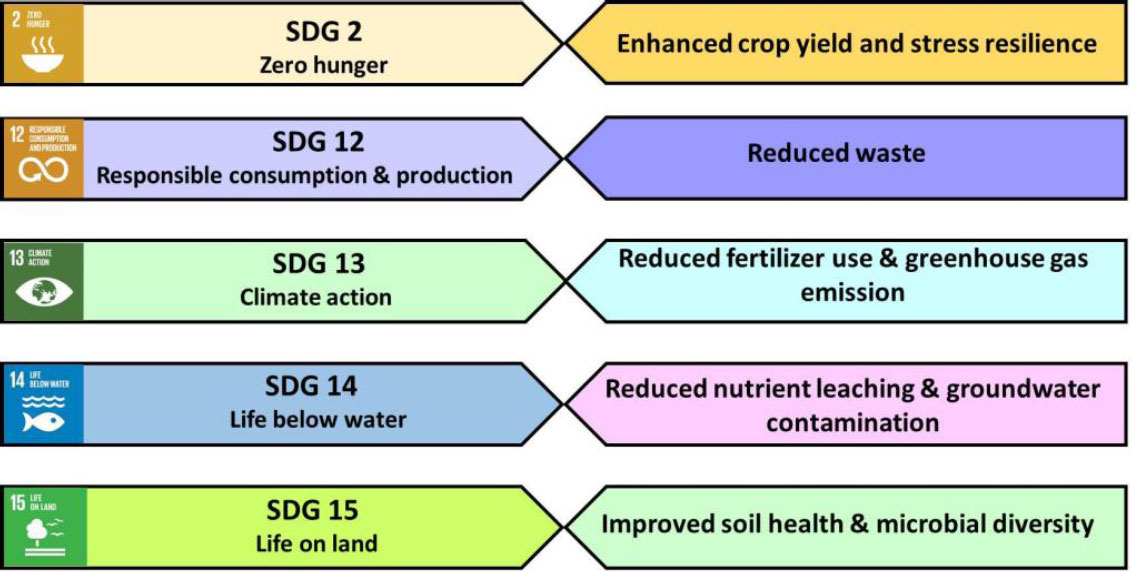
Fulfilment of the United Nations Sustainable Development Goals (UNSDGs) through diverse microbial metabolite activities.
4.1. Holistic Ecosystem Approaches: Integrating Microbial Metabolites into IPM and INM
The future of microbial metabolites in agriculture does not reside in their perception as isolated magical remedies, but rather in their strategic incorporation into comprehensive, ecosystem-oriented management frameworks. This means that they need to be included in Integrated Pest Management (IPM) and Integrated Nutrient Management (INM) systems [98]. IPM, for example, is a comprehensive approach that focuses on pest prevention for a longer time by using a combination of biological management, habitat alteration, cultural practices, and resistant cultivars [99]. In these frameworks, microbial metabolites can serve both complementary and synergistic functions, enhancing overall system resilience rather than being viewed as discrete treatments.
In crop protection strategies, a microbial strain for pest management is selected on the basis of the types of metabolites produced by it and their specific bioactivity against the target pest. Few examples of microbial-based pesticides developed for insect control include Spinosad, a bacterial metabolite derived from Saccharopolyspora spinosa [100]. B. thuringiensis and its various subspecies produce a β-exotoxin known as thuringiensin, which exhibits insecticidal activity against a wide range of pests, including lepidopterans, coleopterans, and dipterans [101]. Polyketide compounds such as avermectins, spinosyns, polynactins, tetramycins, and related analogs are the insecticidal compounds produced by actinomycetes, which are widely commercialized for crop protection [102]. These have been widely used in commercial formulations for controlling agricultural pests.
To develop more robust and reliable solutions, it's important to understand and account for complex interactions, such as the chemical interactions between microbes and plant root exudates [12]. The transition from reductionist single-strain applications to comprehensive, ecosystem-based methodologies, including microbial metabolites in Integrated Pest Management (IPM) and Integrated Nutrient Management (INM) strategies, signifies an essential progression towards ecological engineering in agriculture. This means recognizing that microbial inputs are not just products, but active parts of a living ecosystem and that in order to achieve actual sustainability and consistent effectiveness, we need to understand and manage the complex web of interactions within the agroecosystem, using its natural complexity rather than trying to make it simpler.
4.2. Precision Agriculture and Customized Microbial Solutions: Prospects and Ethical Implications
The emergence of advanced omics technologies, especially metagenomics and metabolomics, offers unprecedented opportunities for precision agriculture. A detailed profile of the native soil microbiome can be prepared using these tools, enabling the development of personalized soil-specific microbial solutions that are particular to the soil and crops on a farm [103]. Such precision tools and instruments can analyse production gains, assess nutrient cycling dynamics, predict disease risks, and monitor the impact of certain farm practices, thus offering recommendations that are customized to specific field conditions [104]. This is a big step toward making microbial therapies as effective and sustainable.
However, the over-dependence on data-driven precision agriculture, especially when it comes to sensitive soil microbiome data, raises serious ethical concerns that demand proactive consideration.
- Data Privacy: The unauthorized access, collection, and sharing of sensitive farm data, including soil microbiome profiles, by agricultural technology providers is a legitimate concern for farmers. The current absence of explicit data sovereignty rules and the vagueness of legal frameworks are being exploited to collect farmers' data without their consent [105].
- Algorithmic Transparency: Many Artificial Intelligence (AI) algorithms used in precision agriculture puzzle consumers in understanding the specific recommendations. This lack of transparency makes it harder to trust and validate the results [106].
- Accessibility and Equity: AI-based solutions and customized microbial products can be expensive and complex, thereby resulting in a digital gap that leaves smallholder farmers who lack the requisite resources or technical proficiency. This could result in severe inequalities where a few large companies will maintain disproportionate control over agricultural data and inputs, potentially eroding farmers' freedom and decreasing biodiversity by making practices more uniform [107].
A strong ethical imperative must therefore guide the transformative potential of precision agriculture and personalized microbial solutions. For this, a proactive policy must be developed that prioritizes data sovereignty, makes algorithms transparent, and guarantees equitable access to all farmers, especially the marginal ones. This approach is necessary in order to prevent inequities from worsening and to ensure that these powerful technologies help create a truly sustainable and fair agricultural future.
4.3. Robust Regulatory Framework and Long-term Monitoring of the Environment
The present regulatory processes for microbial products in agriculture are often fragmented, difficult to understand, and take a long time to obtain approval, especially when comparing regions such as the EU and the US [108]. There is an urgent need for tiered risk assessment methods that take into account the unique biological properties of living microorganisms, such as their ability to infect and cause disease, moving ahead of the guidelines that were originally set for synthetic chemical pesticides. To address these problems, New Approach Methodologies (NAMs) and Next-Generation Risk Assessment (NGRA) are emerging that aim to make testing faster, more reliable, and animal-free [88]. This is an important regulatory update to the speed of scientific and commercial progress.
For a robust risk assessment, clear identification and full characterization of microbial strains are of paramount importance. Whole-Genome Sequencing (WGS), which gives the most detailed information, allowing for precise strain-level discrimination, identifies possible virulence factors and ARGs, and facilitates traceability of introduced species in the environment, should be compulsorily done for all commercial microbial strains to make sure this happens [88]. The persistence and ecological impact of released microbial metabolites and inoculants can be tracked by integrating metagenomic surveillance with qPCR monitoring. A high-resolution, culture-independent analysis of microbial community shifts and functional potential can be done using metagenomics; precise quantification of specific taxa or biosynthetic gene clusters within those complex environments can be done using qPCR [109]. Moreover, it is very important to do rigorous, long-term field tests of inoculants in a wide range of soil and climatic conditions to validate emerging products and bridge the gap between lab and field efficacy [40].
CONCLUSION AND FUTURE DIRECTIONS
The booming field of microbial metabolites in agriculture has significant potential to foster sustainable food production amid rising global demand and environmental degradation. However, realizing their full commercial viability requires overcoming several critical challenges, including inconsistent field efficacy, formulation and scalability hurdles, and higher production costs compared to conventional agrochemicals. Addressing these technological challenges, alongside navigating complex regulatory frameworks and encouraging adoption by farmers, will be essential in successfully translating laboratory discoveries into market-ready agricultural solutions. Also, for their successful development and commercialization, they need to be produced on a large scale, formulated with appropriate adjuvants, and stored under suitable conditions. The prevalent single-strain, single-metabolite reductionism needs to consider the complex biotic and abiotic interactions of the natural agroecosystems and to induce a comprehensive environmental impact assessment. Developing microbial solutions must address concerns about the disturbance of native microbiomes, the horizontal transmission of unwanted characteristics such as antibiotic resistance, and unexpected off-target effects on non-target species and biogeochemical cycles.
It is essential to prioritize mechanistic understanding of microbial interactions in situ, advancing beyond correlations to identify causal relationships between metabolites and reported plant or soil phenotypes. Ecological integration is essential, acknowledging that microbial solutions are most efficacious when synergistically integrated into comprehensive Integrated Pest Management (IPM) and Integrated Nutrient Management (INM) frameworks, capitalizing on the inherent complexity of microbial consortia.
Possible future research:
- Advanced Omics and AI/ML for Predictive Modelling: To overcome data complexities, predict microbial interactions, and accurately connect genetic potential to expressed function in real time, we need to create more advanced multi-omics integration strategies and use AI and machine learning models [54]. For insights on metabolite distribution and activity, routine use of Mass Spectrometry Imaging (MSI) can be done, which provides spatially resolved information [48].
- Synthetic Ecology and Community Design: The development of Synthetic Microbial Communities (SynComs) is crucial. These regulated, ecologically relevant experimental platforms serve as powerful tools for elucidating complex microbial interactions, thus facilitating the rational design of robust microbial consortia tailored to specific agricultural challenges [12].
- Strong Risk Assessment and Regulatory Science: Research needs to focus on the environmental fate of metabolites, the risks of HGT, and the development of standardized, harmonized, and tiered risk assessment frameworks. This involves making Whole-Genome Sequencing (WGS) compulsory for all commercial microbial strains to ensure that they are safe and can be traced [110].
- Research on Social and Ethical Issues: Interdisciplinary research on the ethical implications of such technologies has to be performed for fair sharing and to prevent the existing disparities among farmers from worsening. This study should focus on data governance, accessibility, and equality [111].
By adopting these critical viewpoints and committing to extensive, interdisciplinary research and proactive regulatory advancement, the agricultural sector can overcome current constraints and unlock the full, sustainable potential of microbial metabolites for global food security and environmental health.
AUTHORS’ CONTRIBUTIONS
The authors confirm their contribution to the paper as follows: Y.N.T., R.R.: Study conception and design; Y.N.T.: Data collection; Y.N.T.: Analysis and interpretation of results; Y.N.T., R.R.: Draft manuscript preparation. All authors reviewed the results and approved the final version of the manuscript.
LIST OF ABBREVIATIONS
| Anti-SMASH | = Antibiotics and Secondary Metabolites Analysis Shell |
| ARGs | = Antibiotic Resistance Genes |
| BGCs | = Biosynthetic Gene Clusters |
| CFS | = Cell-Free Supernatants |
| CK | = Cytokinin |
| eSNaPD | = Environmental Surveyor of Natural Product Diversity |
| ET | = Ethylene |
| EU | = European Union |
| EPS | = Exopolysaccharides |
| GARLIC | = Global Alignment for natuRaL-products chemInformatiCs |
| GRAPE | = Generalized Retrobiosynthetic Assembly Prediction Engine |
| HGT | = Horizontal Gene Transfer |
| IAA | = Indole-3-Acetic Acid |
| ISR | = Induced Systemic Resistance |
| INM | = Integrated Nutrient Management |
| IPM | = Integrated Pest Management |
| JA | = Jasmonic Acid |
| JH | = Juvenile Hormone |
| LI | = Live Inoculant |
| MSI | = Mass Spectrometry Imaging |
| NPs | = Natural Products |
| NAMs | = New Approach Methodologies |
| NGRA | = Next-Generation Risk Assessment |
| NGS | = Next-Generation Sequencing |
| PAMPs | = Pathogen-Associated Molecular Patterns |
| PGP | = Plant Growth Promotion |
| PGPR | = Plant Growth-Promoting Rhizobacteria |
| PRISM | = Prediction Informatics for Secondary Metabolomes |
| PMs | = Purified Metabolites |
| qPCR | = Quantitative PCR |
| SA | = Salicylic Acid |
| SIP | = Stable Isotope Probing |
| SynComs | = Synthetic Microbial Communities |
| SMC | = Synthetic Microbial Consortia |
| SAR | = Systemic Acquired Resistance |
| UN SDGs | = United Nations Sustainable Development Goals |
| VOCs | = Volatile Organic Compounds |
| WGS | = Whole-Genome Sequencing |
FUNDING
The authors would like to acknowledge the financial support received by CSIR-HRDG under project File No. 37WS (0051)/2023-24/EMR-II/ASPIRE.
ACKNOWLEDGEMENTS
Necessary support provided under the IoE scheme 6031 of Banaras Hindu University is duly acknowledged.