All published articles of this journal are available on ScienceDirect.

Moldova’s Agricultural Landscape: Comprehensive Insights into Grain and Livestock
 iD
Ludmila Bivol1
Elena Scripnic1
Ana Raileanu1
Dumitru Malenchi1
iD
Ludmila Bivol1
Elena Scripnic1
Ana Raileanu1
Dumitru Malenchi1
Authors Info & Affiliations
Abstract
Sustainable livestock production is crucial for ensuring food security, sustaining natural ecosystems, and supporting rural livelihoods. In Moldova, the livestock sector faces challenges such as climate variability, limited forage availability, and the need to reduce greenhouse gas emissions.
This review synthesizes the current literature on strategies for developing resilient livestock systems, with a focus on efficient feed management. Innovative approaches considered include the cultivation of alternative forage species, optimization of feed use, and the adoption of environmentally friendly production practices. Policy frameworks, research initiatives, and technological advancements relevant to sustainable livestock development were also analysed. Evidence indicates that alternative forage species and optimized feed strategies can enhance livestock productivity while reducing environmental impact. When combined with supportive policies and technological innovations, these environmentally friendly practices improve both system resilience and overall efficiency. Integrating feed management strategies with policy support and technological tools is critical for sustainable livestock production. Stakeholders, including farmers and decision-makers, can implement these approaches to mitigate the effects of climate variability and resource limitations.
The review provides actionable guidance for improving livestock productivity in Moldova while maintaining ecological balance. The adoption of innovative feeding strategies and environmentally sustainable practices can strengthen resilience and sustainability in the livestock sector.
1. INTRODUCTION
Livestock production is a cornerstone of global food security, yet producers face the dual challenge of adapting to climate change while sustainably reducing greenhouse gas emissions. Climate variability and extreme weather events increasingly disrupt agri-food value chains, lowering agricultural productivity worldwide and threatening the availability of safe, nutritious, and accessible animal-based products. The impacts of climate change on livestock systems vary by agroecological region, animal species, and production system [ 1 ].
These impacts occur both directly, affecting animal physiology, productivity, and welfare, and indirectly, by altering the availability and quality of feed resources [ 2 ]. According to current projections, global meat consumption is projected to rise by 2034, with poultry increasing by 21%, lamb by 16%, beef by 13%, and pork by 5%. Rapid population growth and rising incomes will concentrate 45% of this increase in upper-middle-income countries. Beyond China and India, countries such as Brazil, Indonesia, the Philippines, the United States, and Vietnam are expected to see the largest growth. Africa’s population is projected to grow from 1.5 billion to 1.8 billion over the next decade, driving a 33% rise in regional meat consumption [ 3 ].
On a per capita basis, total meat consumption is expected to grow by only 3%, reaching 29.3 kg per person per year in carcass weight-roughly half the growth observed in the previous decade. In high-income countries, which accounted for 35% of global meat consumption in 2024 but only 17% of the global population, per capita consumption is slowing, reflecting changing dietary preferences, including a shift from beef and pork towards poultry. In 2024, global meat production grew moderately by 1.3%, reaching approximately 365 million tonnes, driven mainly by poultry and beef, while pork and sheep meat production remained stable [ 4 ].
The Republic of Moldova, a small landlocked country in Eastern Europe (33,846 km 2 , population ~3.5 million), relies heavily on agriculture, which contributes 14.5% of GDP and employs 28% of the population, half of whom are women. The agricultural sector faces multiple challenges, including recurrent droughts, economic constraints, and regional instability caused by the ongoing war in Ukraine, all of which negatively affect production and farm incomes. Despite FAO support, such as animal feed distribution and agricultural development projects, production levels remain low [ 5 ]. In addition, Moldova’s meat production remains limited, with poultry being the dominant product [ 6 ].
Moldova is increasingly affected by recurrent droughts and soil erosion, with more than 40% of its agricultural land already degraded, making the sector highly vulnerable to climate shocks. These constraints underscore the urgency of assessing the country’s grain and livestock systems to identify resilience gaps and guide sustainable development [ 7 ].
Recent assessments highlight that Moldova faces significant climate-related and resource constraints that directly threaten the sustainability of its agricultural sector. According to the Land Degradation Neutrality Strategy launched by the Food and Agriculture Organization [ 8 ], extensive areas of the country are affected by soil erosion, declining fertility, and progressive land degradation. Field research on conservation agriculture demonstrates that increasing climate variability, especially recurrent droughts and uneven precipitation, has made soil moisture a critical limiting factor, while no-tillage systems and cover crops improve water retention and crop stability [ 9 ]. Studies conducted under the Stockholm Environment Institute’s Green Agenda Moldova initiative emphasize the need to diversify water sources, including the reuse of treated wastewater for irrigation in drought-affected regions [ 10 ]. Additionally, a regional assessment published in Sustainability highlights persistent structural vulnerabilities in Moldovan agriculture, including low climate resilience, high dependence on precipitation, and limited adaptive capacity [ 11 ].
In many rural communities, roughly 70% of people depend on agriculture to support themselves and their families [ 12 ]. Agriculture remains a cornerstone of the national economy, accounting for nearly half of all exports, particularly through products such as walnuts, apples, wheat, maize, and barley [ 13 ]. To offset domestic production shortfalls, Moldova imports wheat, meat, and dairy products for both human and animal consumption [ 14 ]. Within the European Union, meat production trends are mixed. Poultry production continues to grow, whereas pork production slightly decreased by 0.5% in 2024, and beef production declined by 1%, with further reductions expected in 2025. These patterns reflect structural adjustments in the EU agricultural sector [ 15 ].
Overall, while global meat production increased in 2024, Moldova’s livestock sector faces significant challenges, contrasting with the more resilient and structurally adjusted production systems in the EU. Understanding these dynamics is essential for planning sustainable livestock development strategies in Moldova.
The primary aim of this review is to provide a comprehensive descriptive analysis of grain and meat production in Moldova over the past three decades. Specifically, the review seeks to: (1) examine trends in grain production and its contribution to livestock feed; (2) analyse patterns of meat production across key livestock categories, including poultry, pork, and beef; and (3) assess the relationship between grain availability and meat output. By synthesizing existing data and literature, this study provides an evidence-based foundation for strategic planning and future research in Moldova’s agri-food sector.
2. MATERIALS AND METHODS
This study presents a descriptive analysis of grain and meat production in the Republic of Moldova. The research is based on secondary data obtained from official national and international sources. A comprehensive and replicable methodology was applied, including consultation of multiple databases (Scopus, Web of Science, and Google Scholar), the use of structured search strings and keyword combinations, and the definition of a specific publication timeframe. Clear inclusion and exclusion criteria were applied, and all screening steps were performed systematically by the authors.
2.1. Data Collection
Primary sources of data included the National Bureau of Statistics of the Republic of Moldova, the Food and Agriculture Organization of the United Nations (FAO), and the World Bank databases. The time frame considered spans from 1992 to 2024, allowing for the examination of trends over three decades, including periods of economic transition, agricultural restructuring, and market liberalization. Data on grain production included major cereal crops such as wheat, maize, barley, and rye. Information on meat production encompassed the principal livestock categories: cattle, pigs, poultry, and small ruminants. Data were collected in both quantitative terms (thousand tons) and as relative changes over time.
2.2. Data Analysis
The collected data were analysed using descriptive statistical methods. Key indicators, including total production, percentage change over consecutive years, and per capita production, were calculated. Time-series analysis was applied to assess long-term trends and patterns. Correlation analysis was conducted to explore the relationship between grain production and meat output, given the reliance of livestock production on grain-based feed.
2.3. Visualization
To enhance the clarity of the analysis, the data were graphically represented using line charts, bar charts, and scatter plots. All figures were created using Microsoft Excel and R statistical software, allowing for the visual identification of production trends, fluctuations, and potential correlations between the grain and meat sectors.
2.4. Limitations
The study is limited to available official data, which may be subject to reporting inconsistencies or revisions. Additionally, the analysis is descriptive and does not involve inferential statistical modelling or predictive forecasting. This methodological approach provides a comprehensive overview of Moldova’s agricultural production trends, providing a foundation for further research on the interdependence of crop and livestock sectors.
3. RESULTS AND DISCUSSION
Grain production plays a central role in Moldova’s agricultural sector, with cereals such as maize, wheat, and barley covering around 65% of the country’s arable land. Maize is primarily grown for animal feed, while wheat is used for both human consumption and livestock nutrition. Although cultivated on a smaller scale, barley also contributes significantly to animal feeding systems [16].
Over recent years, Moldova has experienced significant fluctuations in grain yields due to climatic events. For instance, in 2022, the country faced an extreme drought that led to 50–60% losses in some major crops, including maize and wheat [17]. Such adverse conditions have directly impacted the availability of feed for livestock, exacerbating challenges for farmers. Moldova’s agriculture remains particularly exposed to climate fluctuations. Consequently, drought poses a significant risk, with estimated annual crop losses reaching US$20 million under the assumption of catastrophic droughts occurring every seven years [18]. Projected increases in temperature are expected to negatively affect agricultural yields, with the most pronounced impacts observed in lower-latitude regions [19].
From 2016 to 2024, the production of cereals and legumes in Moldova was strongly influenced by climatic fluctuations. Droughts and water stress frequently affected crop performance, leading to considerable variations in annual yields. These challenges are largely driven by Moldova’s climate, which features warm summers and mild, dry winters. During the growing season, periods of intense rainfall are often followed by prolonged dry spells, increasing the vulnerability of agricultural production systems [20], as approximately 90% of crop production depends on rainfall. In 2023, Moldova's grain sector reported a 35.1% increase in crop production compared with the previous year, with significant gains in cereal output. This increase was essential in supporting the livestock sector, which, however, experienced a slight decline of 1.9% in production during the same period (Table 1) [21].
| Year | Wheat | Barley | Corn | Sunflower | Soy |
|---|---|---|---|---|---|
| 2017 | 1,251 | 249 | 1,773 | 804 | 47 |
| 2018 | 1,163 | 175 | 2,074 | 789 | 58 |
| 2019 | 1,148 | 168 | 2,130 | 811 | 64 |
| 2020 | 570 | 107 | 785 | 493 | 33 |
| 2021 | 1,436 | 235 | 171 | 892 | 36 |
| 2022 | 787 | 119 | 446 | 576 | 23 |
| 2023 | 1,050 | 150 | 920 | 700 | 28 |
| 2024 | 717 | 128 | 717 | 610 | 25 |
Note: (data 2024 on corn taken from FAO: 717 thousand tons; other indicators - according to trends and average values from statistics).
The production of cereals and leguminous crops in Moldova, including maize, winter wheat, and winter barley, from 2016 to 2024, exhibited substantial fluctuations that are closely linked to climatic variability. Total production increased steadily from 2,993.2 thousand tonnes in 2016 to 3,549.6 thousand tonnes in 2019, followed by a sharp decline to 1,505.3 thousand tonnes in 2020 (Fig. 1).
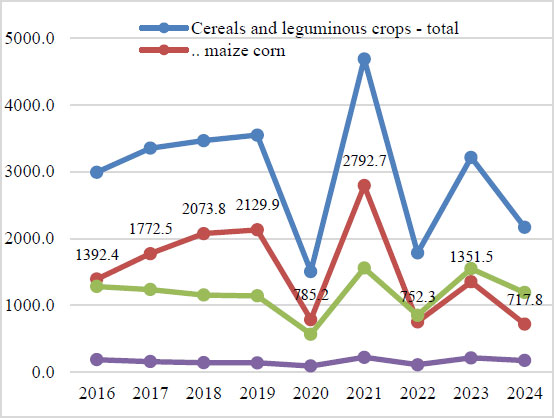
This decrease coincides with one of the most severe droughts in recent decades, which significantly reduced soil moisture reserves, particularly in southern regions, and negatively affected crop growth and development [16]. A strong recovery was observed in 2021, with production reaching 4,690.0 thousand tonnes, but output fell again to 1,784.4 thousand tonnes in 2022 due to continued dry conditions [24]. Production rebounded to 3,214.8 thousand tonnes in 2023, only to decline to 2,168.3 thousand tonnes in 2024, remaining below pre-2020 levels.
Maize, the primary contributor to total production, followed a similar pattern. Output rose from 1,392.4 thousand tonnes in 2016 to 2,129.9 thousand tonnes in 2019, dropped sharply to 785.2 thousand tonnes in 2020, peaked at 2,792.7 thousand tonnes in 2021, and decreased to 717.8 thousand tonnes in 2024, the lowest level since 2020. Maize consistently accounted for 46–59% of total cereal and legume production, highlighting its critical role in the sector while also demonstrating its sensitivity to climatic stress [25].
Winter wheat production was comparatively more stable, ranging from 1,281.3 thousand tonnes in 2016 to 1,140.9 thousand tonnes in 2019, followed by a significant decline to 565.7 thousand tonnes in 2020, with recovery in 2021 (1,558.1 thousand tonnes) and 2023 (1,549.3 thousand tonnes), before decreasing to 1,189.7 thousand tonnes in 2024. Winter barley, the smallest contributor (5–7% of total production), demonstrated less volatility, decreasing from 184.7 thousand tonnes in 2016 to 137.1 thousand tonnes in 2019, reaching a low of 89.9 thousand tonnes in 2020, peaking at 219.9 thousand tonnes in 2021, and reaching 171.9 thousand tonnes in 2024.
The synchronized decline in 2020 across all crop types highlights the impact of shared external factors, particularly extreme droughts and higher temperatures, which are consistent with ongoing climate change trends in Moldova [26]. These climatic stressors continue to influence agricultural output, as evidenced by the fluctuations in 2022 and 2024. To improve resilience and maintain food security, investment in climate-adaptive practices, such as drought-resistant crop varieties, improved irrigation systems, and efficient water management, is essential [27].
The evolution of grain production in the Republic of Moldova between 1999 and 2023 demonstrates both the structural instability of the sector and its strong dependence on agro-climatic conditions. Annual production volumes fluctuated significantly, ranging from a historical minimum of 1.19 million tonnes in 2012 to a peak of 4.64 million tonnes in 2021. These wide variations reflect the vulnerability of Moldova’s agriculture to climatic variability, particularly recurring droughts, which represent one of the most persistent threats to the sector.
In the early 2000s, grain production generally fluctuated between 2.0 and 2.9 million tonnes, with wheat, maize, and barley as the primary crops. This period was marked by modest growth but also by frequent declines, highlighting the limited adaptability of traditional agricultural practices to increasingly unstable weather conditions. A temporary recovery occurred in 2008, when grain production reached 3.13 million tonnes, but subsequent years (2009–2012) again brought substantial reductions, culminating in the lowest production level of the period in 2012.
Between 2015 and 2019, Moldova’s grain production achieved relative stability and exceeded 3.4 million tonnes in several years, supported by improvements in cultivation technologies and the use of higher-yielding varieties. However, the severe drought of 2020 caused a dramatic decline to 1.47 million tonnes, one of the lowest harvests in the past two decades. This was followed by a strong recovery in 2021, when production peaked at 4.64 million tonnes, demonstrating the sector’s significant recovery potential under favourable conditions. Nevertheless, the subsequent decline to 1.75 million tonnes in 2022 once again underscored the systemic fragility of the sector. By 2023, output partially recovered to 3.18 million tonnes, offsetting the previous year’s downturn but not reaching earlier peaks.
Taken as a whole, the long-term analysis of Moldova’s grain sector highlights several key characteristics: pronounced volatility, with production levels demonstrating extreme year-to-year variations that reflect the risks associated with reliance on rain-fed agriculture; high climate sensitivity, as severe droughts (2007, 2012, 2020, and 2022) had a strong negative impact on production, undermining food and feed security; strong recovery potential, with near-record harvests achieved in favourable years (2008, 2019, and 2021), proving the sector’s capacity for high productivity; and structural weaknesses, including insufficient irrigation systems, outdated agricultural practices, and limited diversification, which exacerbate exposure to climate shocks.
Grain production remains a cornerstone of Moldova’s food and feed security. However, its extreme volatility generates risks for both domestic consumption and the livestock feed base. Ensuring long-term stability requires strategic investments in climate-resilient farming practices, irrigation, crop diversification, as well as storage and processing infrastructure.
Grain cultivation continues to serve as a fundamental pillar of Moldova’s agricultural system, functioning both as an important export commodity and as the main feed resource for the livestock sector. According to FAO [28], Moldova cultivates significant areas of maize, wheat, and barley, which provide the bulk of feed for pigs and poultry. However, fluctuations in grain yields, shaped by weather variability, droughts, and rising input costs, directly influence the sustainability of meat production.
Therefore, the interdependence between grain yields and meat production in Moldova is direct and critical. Strengthening the resilience of the feed base through investments in irrigation, diversification of crop structures, and the development of modern storage and processing capacities is essential for stabilizing livestock farming and reversing the negative trends. Without addressing the vulnerability of the grain–livestock nexus, Moldova risks further erosion of domestic food security and competitiveness in international markets.
In 2024, preliminary estimates indicate that cereal production decreased to around 2.15 million tonnes, slightly below the five-year average, with wheat production reaching about 1.2 million tonnes. However, official data on meat production for the same year have not yet been published.
The overall evidence underscores that while grain and meat production in Moldova show certain parallel trends, the correlation between them is moderate and mediated by multiple factors such as agricultural policies, climatic stress, market conditions, and shifts in consumer demand. Sustained development of both sectors requires systemic modernization and climate adaptation measures.
The interdependence between grain production and livestock feed is evident, as fluctuations in cereal yields directly influence the cost and availability of animal feed. Addressing these challenges requires integrated strategies that enhance both crop resilience and livestock productivity, thereby supporting food security and sustainable agricultural development in Moldova.
3.1. Impact of Feed on Livestock Growth and Meat Production
Moldova is known for its diverse agricultural sector, which includes the cultivation of staple crops such as wheat, barley, and maize, alongside a wide range of fruits, vegetables, and livestock products. Livestock production represents an important component of the agricultural economy, providing both income and food security for many rural households.
In recent years, however, the livestock sector has faced a number of significant challenges. Climate change, economic pressures, and geopolitical instability have increasingly affected production systems and farm profitability. Recurrent droughts have caused substantial crop losses, reducing the availability of animal feed and driving up production costs. In 2022, for example, extreme drought conditions led to losses of 50–60% in key crops such as sunflower, maize, and wheat, placing considerable strain on smallholder farmers.
These difficulties were further intensified by the war in Ukraine, which disrupted regional supply chains and contributed to sharp increases in the cost of agricultural inputs, including fertilizers and fuel, much of which is imported into Moldova. As a result, many livestock producers struggled to secure affordable feed supplies and maintain their herds, threatening the sustainability of their farming operations [29].
In response to these challenges, the Food and Agriculture Organization (FAO) of the United Nations, in collaboration with the Ministry of Agriculture and Food Industry of Moldova, has implemented several initiatives to support the livestock sector. These initiatives include distributing animal feed to affected households, promoting climate-smart agricultural practices, and enhancing veterinary services to improve animal health and productivity [30].
Despite these efforts, the livestock sector continues to face challenges related to limited access to veterinary services, inadequate infrastructure, and the need for modernization. Addressing these issues is crucial for enhancing the resilience and sustainability of Moldova's livestock sector and ensuring food security for its rural population.
The availability and nutritional quality of livestock feed are key determinants of animal growth, health, and meat yield. These factors are shaped by complex local interactions among elevated CO2 concentrations, tropospheric ozone (O3) levels, temperature, and precipitation patterns.
Livestock diets comprise grains, particularly in poultry, pig, and intensive ruminant systems; aboveground crop biomass from dual-purpose crops (used both for grazing and harvesting); and plant residues such as straw, which serve as primary feed in mixed crop-livestock systems. Natural and sown pastures also provide essential forage in grazing-based and integrated systems. Furthermore, animals may be fed by-products and waste materials, including oilseed cakes, bran, vegetable residues, and brewery by-products, as well as commercial concentrates and feed additives [31].
The quantity and quality of these feed resources directly influence animal growth performance, reproductive efficiency, and meat quality, thereby establishing a critical link between feed management and the sustainability and productivity of meat production systems.
An important component of sustainable livestock production in Moldova lies in diversifying the forage base and optimizing feed strategies by adopting alternative forage species and mixed sward systems. Recent research shows that multispecies grasslands, that is, sown mixtures of grasses, legumes, and forbs, can sustain high forage productivity and quality while significantly reducing the need for synthetic nitrogen fertilizers (multispecies swards with 150 kg N/ha produced comparable yields to monocultures fertilized with 300 kg N/ha) and offering greater resilience under variable weather conditions (reduced sensitivity to drought) compared with intensively fertilized permanent grasslands [32]. Additionally, studies on non-conventional forage plants have identified potential roughage sources that, despite lower protein levels, may provide acceptable fibre quality and contribute to feed security during periods of scarcity [33]. More broadly, the use of alternative feeds, such as crop residues, agro-industrial by-products, silage from diverse herbaceous species, legumes, and browse, has been shown to improve digestibility, maintain or enhance meat and milk productivity, and reduce greenhouse gas emissions (notably methane) from ruminants, thus helping to reduce the environmental footprint of livestock systems [34].
Another alternative is the use of rumen-protected amino acids, particularly methionine and lysine, along with the inclusion of fibrous by-products in the diet, which appears to be a promising strategy for improving the sustainability of milk production, including under Moldovan conditions. Several studies have shown that reducing the overall crude protein content and replacing part of the concentrates with fibrous by-products, combined with the supplementation of rumen-protected amino acids, can maintain or even improve lactation performance, enhance nitrogen-use efficiency, reduce water requirements, and thus lower the environmental footprint [35].
Rumen-protected methionine (RPM), at appropriate doses (e.g., 7.5–12.5 g/day, as recommended in meta-analyses), has been shown in several studies to increase milk fat and protein content, although the overall increase in milk yield was less pronounced [36]. When combined with fibrous by-products, this approach allows for reduced dependence on grains and concentrates and lowers nitrogen and water emissions per unit of milk produced, which is particularly relevant for regions with limited feed and water resources, such as Moldova.
Moreover, another potential strategy to improve the impact of feed on livestock is the inclusion of well-calibrated mixtures of hydrolysable and condensed tannins in dairy cow diets. These natural polyphenols have been shown to enhance milk yield, improve nitrogen utilization, and support reproductive performance while reducing environmental impacts. Supplementation with a tannin mixture (e.g., By-Pro® at 0.3% of dietary dry matter) increased milk production by an average of 2.3 L/day over 0–365 DIM, with mid- and late-lactation cows showing gains of up to 3.6 L/day, alongside modest improvements in milk fat and protein content [37].
Tannins also improve nitrogen efficiency by shifting nitrogen excretion from urine to faeces, reducing ammonia emissions and nitrogen losses. Feeding tannin-treated forages can moderate ruminal protein degradability and methane production, enhancing feed efficiency and sustainability without disrupting metabolic status [38].
Additionally, mixed tannin supplementation may enhance reproductive performance. One on-farm trial reported a 9% reduction in services per conception and a 6% decrease in days open, indicating improved fertility under resource-limited conditions [39]. Feeding tannin-treated forages, such as silages enriched with hydrolysable tannins, can moderate ruminal protein degradability and methane production, enhancing feed efficiency and overall sustainability without major disruption of metabolic status [40].
Overall, incorporating well-formulated tannin mixtures offers a practical strategy to increase the sustainability and efficiency of milk production in resource-constrained regions, such as Moldova.
In the context of Moldova, where farm animals often lack access to high-quality feed, processing local forage such as wheat straw using methods such as steaming, ammoniation, or fungal fermentation appears especially relevant. For instance, solid-state fermentation of wheat straw with white-rot fungi (especially Pleurotus ostreatus) has been shown to significantly improve crude protein content and in vitro dry matter digestibility (IVDMD), thus converting low-value straw into more nutritious ruminant feed [41]. Moreover, pre-treatment by steam explosion substantially enhances digestibility by breaking down cellulose and hemicellulose and improving fermentable sugar release and microbial colonization in the rumen environment [42].
Such treatments could enable Moldovan farms to use residual biomass (crop residues, straw, and harvest leftovers) as “functional” feed, reducing reliance on imported concentrates and lowering feeding costs. At the same time, implementation should account for local constraints, including climate, humidity, available infrastructure, and materials (e.g., ammonia and steam generators). Accordingly, we underscore the need for further empirical trials under Moldovan agro-climatic conditions to assess the effectiveness and economic feasibility of processing straw and other lignocellulosic residues for local animal husbandry.
Furthermore, in Moldova, alternative feed sources such as agricultural by-products, forage, and algae supplements are being explored for their potential to reduce greenhouse gas emissions from livestock while enhancing feed resilience. Feed safety remains a key consideration, particularly regarding the accumulation of heavy metals or iodine in animal products [36].
Nevertheless, the evidence base remains incomplete. For many alternative species, data on long-term ecological effects, persistence, palatability, and digestibility under Moldovan climatic and soil conditions are lacking, which calls for cautious interpretation and further empirical research. At the same time, these uncertainties are compounded by notable shifts in the livestock sector itself. In Moldova, between 2017 and 2024, livestock numbers exhibited heterogeneous dynamics across animal categories. Cattle numbers declined most significantly, from 182 thousand head in 2017 to 98 thousand head in 2024 (Fig. 2), representing a reduction of approximately 46%.
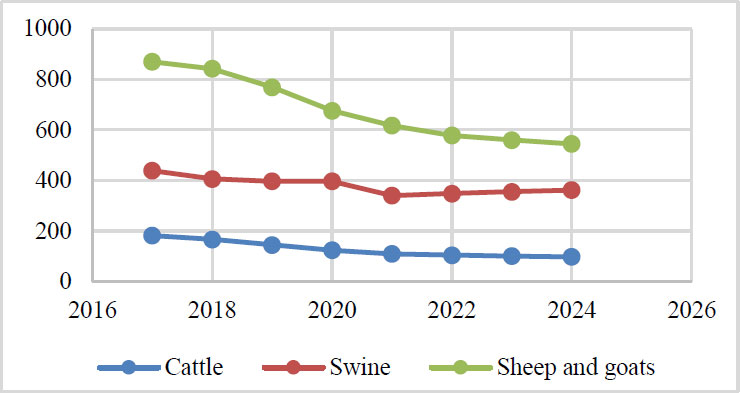
Livestock by categories of producers, thousands of heads [43].
This sharp decrease is closely linked to both economic and environmental constraints. The low profitability of dairy and beef production, combined with heavy reliance on imports (about 60% of domestic consumption), has weakened incentives for farmers to maintain cattle herds.
Furthermore, frequent droughts during the summer months have exacerbated fodder shortages, directly impacting feed availability and contributing to the contraction of cattle populations [44]. Sheep and goats also registered a considerable decline, decreasing from 870 thousand head in 2017 to 545 thousand head in 2024 (37%) (Table 2).
| Year | Cattle, thousand head | % change vs. 2017 |
Swine,
thousand head |
% change vs. 2017 |
Sheep & goats
(thousand head) |
% change vs. 2017 |
|---|---|---|---|---|---|---|
| 2017 | 182 | – | 439 | – | 870 | – |
| 2018 | 167 | –8.2% | 406 | –7.5% | 842 | –3.2% |
| 2019 | 145 | –20.3% | 397 | –9.6% | 769 | –11.6% |
| 2020 | 124 | –31.9% | 397 | –9.6% | 676 | –22.3% |
| 2021 | 109 | –40.1% | 340 | –22.6% | 617 | –29.0% |
| 2022 | 104 | –42.9% | 348 | –20.7% | 578 | –33.6% |
| 2023 | 101 | –44.5% | 355 | –19.1% | 560 | –35.6% |
| 2024 | 98 | –46.2% | 362 | –17.6% | 545 | –37.4% |
The decline in sheep and goat production in Moldova is determined by a combination of interconnected factors. Among them are the reduced demand for mutton and wool in both domestic and export markets, insufficient state support for small ruminant breeders, and the ongoing depopulation of rural areas, which has diminished the labour force necessary for extensive sheep farming. In addition, the increasing frequency of extreme weather events has accelerated pasture degradation and reduced forage yields, further weakening the sustainability of sheep and goat production systems [45, 46].
In contrast, pig production has demonstrated greater resilience. Between 2017 and 2024, the pig population decreased from 439 thousand to 362 thousand head, equivalent to an 18% reduction. However, after a sharp decline to 340 thousand head in 2021, a partial recovery was observed. This relative stability is explained by the higher efficiency of pigs in feed conversion and the strong consumer preference for pork, which remains more affordable than beef. Furthermore, swine farming relies predominantly on grain-based feed, and the rebound in cereal harvests following drought years has supported the moderate recovery in pig numbers [2, 47].
The livestock population in Moldova has shown changes across different species. These changes reflect shifts in the structure of the livestock sector and its capacity to respond to domestic and international demand. At the same time, production levels continue to remain below potential, despite targeted support from FAO, including the provision of animal feed and funding for agricultural development projects [44, 48, 49].
These trends illustrate the ongoing structural transformation of Moldova’s livestock sector. While cattle and small ruminant herds continue to decline due to low profitability, climate-related stress, and feed shortages, swine and poultry production remain the most resilient subsectors. These branches are more closely aligned with domestic consumer demand and better adapted to the country’s volatile agricultural conditions, thereby making a significant contribution to food security and supply chain resilience.
Livestock production remains an essential component of Moldova’s agricultural economy, encompassing cattle, pigs, sheep, goats, poultry, and horses, with continuous efforts aimed at improving breeding practices and productivity. In 2024, total meat production (in live weight) reached approximately 180,000 tons, representing a 6.6% increase compared with 2023. Over the same period, milk output rose by 2.3%, while egg production increased by 3.4%. These results are largely attributed to direct payments to farmers, which have supported moder-nization and the expansion of production capacity [50].
Despite these achievements, Moldova remains dependent on imports to satisfy internal demand. In 2023, imports of meat and meat products increased by 0.4% to approximately USD 79.2 million, while imports of dairy products and eggs grew by 11.2%, reaching USD 129.2 million [51]. Consequently, only about 40% of domestic consumption is covered by local production, while the remaining 60% depends on external suppliers. In 2022 alone, meat imports totaled USD 71.6 million. Although poultry continues to dominate domestic meat production, the sector is still challenged by various factors that adversely affect output and farmer incomes.
Nevertheless, in 2024, the livestock sector recorded positive dynamics, with notable increases in production volumes. By the end of the year, Moldova produced 179.4 thousand tons of meat (live weight; +6.6%), 267.2 thousand tons of milk (+2.3%), and 627.8 million eggs (+3.4%) [22]. According to the Ministry of Agriculture, livestock farms further expanded their productive potential, reporting 109 thousand tons of meat (live weight; +15.9%), 54.3 thousand tons of milk (+25.4%), and 298 million eggs (+8.6%) [23].
At the European level, meat production trends are diverse. Poultry production continues to expand, while pork output declined by 0.5% in 2024. Beef production decreased by 1% in the same year and is projected to decline further in 2025, reflecting structural adjustments within the EU agricultural sector. Globally, meat production registered growth in 2024, yet Moldova’s sector still faces substantial challenges, whereas the EU experienced a mixed pattern of growth and decline across different categories of meat.
The Moldovan meat market is currently showing moderate growth, driven by rising demand for both fresh and processed meat, growing consumer awareness of healthy diets, and the availability of convenient meat alternatives. However, expansion is constrained by competitive pressures from alternative protein sources and the limited capacity of domestic producers.
With regard to egg production, Moldova achieved a remarkable breakthrough in external markets. In the first half of 2025, exports of chicken eggs for consumption to the EU reached almost 11 million units, a milestone following the country’s authorization to supply eggs to the EU market in 2023. Exports increased sharply from only 9,000 units in 2024 to 10,777,060 units by 1 July 2025 (Fig. 3) [51].
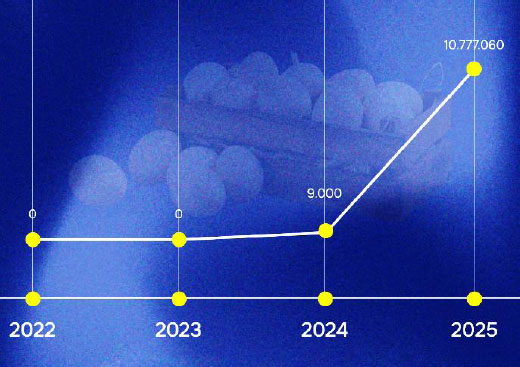
Export of eggs from Moldova to EU.
Exports to non-EU destinations also expanded, with volumes rising from 6,421,680 eggs in 2022 to 12,229,560 in the first half of 2025 (Fig. 4) [52].
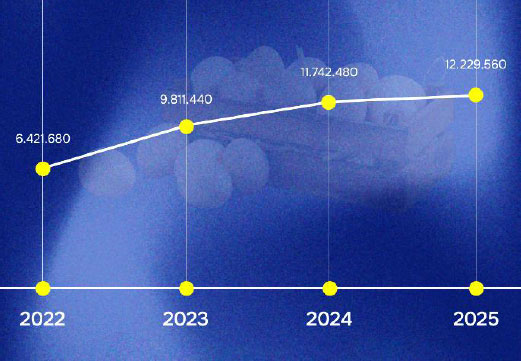
Export of eggs from Moldova to non-EU.
Parallel to this, domestic egg production strengthened to satisfy internal demand, contributing to a steep decline in imports. Over the past four years, the volume of imported eggs fell more than twentyfold, from 18,280,800 units in 2022 to only 868,160 units in 2025 [53]. Moldova secured the right to export consumer eggs to the EU in 2023, with the first shipment delivered in October 2024 (Fig. 5) [54].
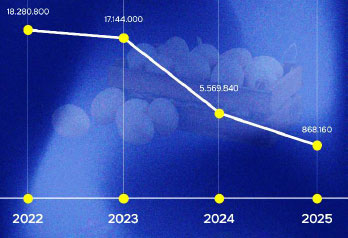
Import of eggs to Moldova.
These achievements underline the growing capacity of Moldova not only to meet its internal requirements but also to compete successfully in international markets. On a global scale, poultry production remains a leading provider of affordable, high-quality animal protein, offering attractive investment opportunities, creating employment, and serving as an important income source for smallholders worldwide. In this context, poultry farming continues to play a pivotal role in Moldova’s agricultural economy, contributing substantially to food security and the livelihoods of rural communities. Its efficiency and productivity depend primarily on the quality and availability of feed, which constitute the largest share of production costs. Therefore, establishing a sustainable, high-quality feed base is crucial for maintaining animal health, ensuring product quality, and fostering economic growth.
One promising opportunity for modernizing Moldova’s livestock sector is the adoption of precision livestock farming (PLF) technologies, including low-cost sensors, remote sensing systems, and computer vision. These solutions enable real-time monitoring of cow health, behaviour, and productivity, including feeding, activity, and posture [55]. Multimodal approaches that combine visual data and sensors provide accurate analysis of behaviour and welfare without invasive devices [56]. Despite challenges related to annotated data and operational conditions, the expansion of non-invasive, adaptive systems can improve productivity, feeding efficiency, and the overall sustainability of livestock farms in Moldova [57, 58].
The National Strategy for Agricultural and Rural Development 2023–2030 and recent reforms to the subsidy system reflect Moldova’s commitment to sustainable agriculture. State support from the National Fund for the Development of Agriculture and Rural Environment now finances farm modernization, rural infrastructure, and innovation, including livestock sector investments [59]. Several types of subsidies (advance payments, staged investments, post-investment support, and direct payments) have been formalized, facilitating the adoption of new feed strategies and sustainable farming practices [60]. However, key barriers remain: accessing subsidies requires compliance with environmental, public health, and animal welfare standards, which may limit feasibility for smaller farms without the capacity for compliance, thus constraining the large-scale uptake of alternative feed solutions [61].
CONCLUSION
Livestock production in Moldova remains a strategically important sector, contributing to food security, rural employment, and export potential, yet it continues to face persistent challenges related to climate variability, limited forage resources, economic constraints, and regional instability.
The analysis reveals a strong correlation between grain production and meat output, underscoring the critical role of the forage base in sustaining livestock productivity. Consequently, reductions in grain harvests directly translate into lower meat production, making the optimization of feed resources a key priority for strengthening sector resilience. To address these challenges, this study prioritizes recommended strategies according to their feasibility and potential impact, offering a clearer roadmap for implementing resilient and environmentally sustainable feed solutions in Moldova. High-feasibility measures include improving feed efficiency, expanding drought-tolerant forage crops, and adopting cost-effective management practices that can be implemented with minimal investment. Medium-term strategies with substantial impact potential involve integrating alternative feed sources, enhancing forage conservation systems, and promoting climate-adaptive livestock practices. Long-term transformative measures, such as the wider adoption of precision technologies and low-emission production systems, can further enhance sustainability and reduce environmental pressures.
Compared with global and European trends, Moldova’s livestock sector still adapts more slowly to climate and market shifts due to limited financial resources and economic uncertainty. Therefore, targeted policy support and investments are needed to accelerate the adoption of the most feasible and impactful strategies. Furthermore, coordinated action among policymakers, researchers, and producers, supported by international partners, is essential for scaling effective solutions. Strategic planning must integrate data on grain and meat production, global market dynamics, and national specificities to guide the development of comprehensive, sustainable approaches that enhance productivity while ensuring environmental and social resilience.
AUTHORS’ CONTRIBUTIONS
The authors confirm their contribution to the paper as follows: C.L.: Developed the study concept, collected and analyzed the data, and prepared the initial manuscript draft; S.E., B.L and R.A.: Contributed to the methodological design, data interpretation, and statistical analysis; C.L., S.E. and M.D.: Critically revised the manuscript and provided substantial improvements to the discussion and conclusions. All authors reviewed the results and approved the final version of the manuscript.
LIST OF ABBREVIATIONS
| EU | = European Union |
| FAO | = Food and Agriculture Organization of the United |
| Nations | |
| RPM | = Rumen-protected methionine |
| IVDMD | = In vitro dry matter digestibility |
| USD | = United States dollar |
AVAILABILITY OF DATA AND MATERIALS
The data supporting the findings of the article is available in the Institutional Repository of the Technical University of Moldova at https://repository.utm.md/ discover.
FUNDING
This research was funded by the Technical University of Moldova and supported by National Agency for Research and Development (NARD) within the project “Enhancing the Environmental Sustainability of Livestock Production through the Management of Irrigated Forage Crops in the Context of Livestock Sector Resilience to Climate Change,” Project Code: 23.70105.5107.03.
ACKNOWLEDGEMENTS
NARD supported this work within the project “Enhancing the Environmental Sustainability of Livestock Production through the Management of Irrigated Forage Crops in the Context of Livestock Sector Resilience to Climate Change,” Project Code: 23.70105.5107.03.